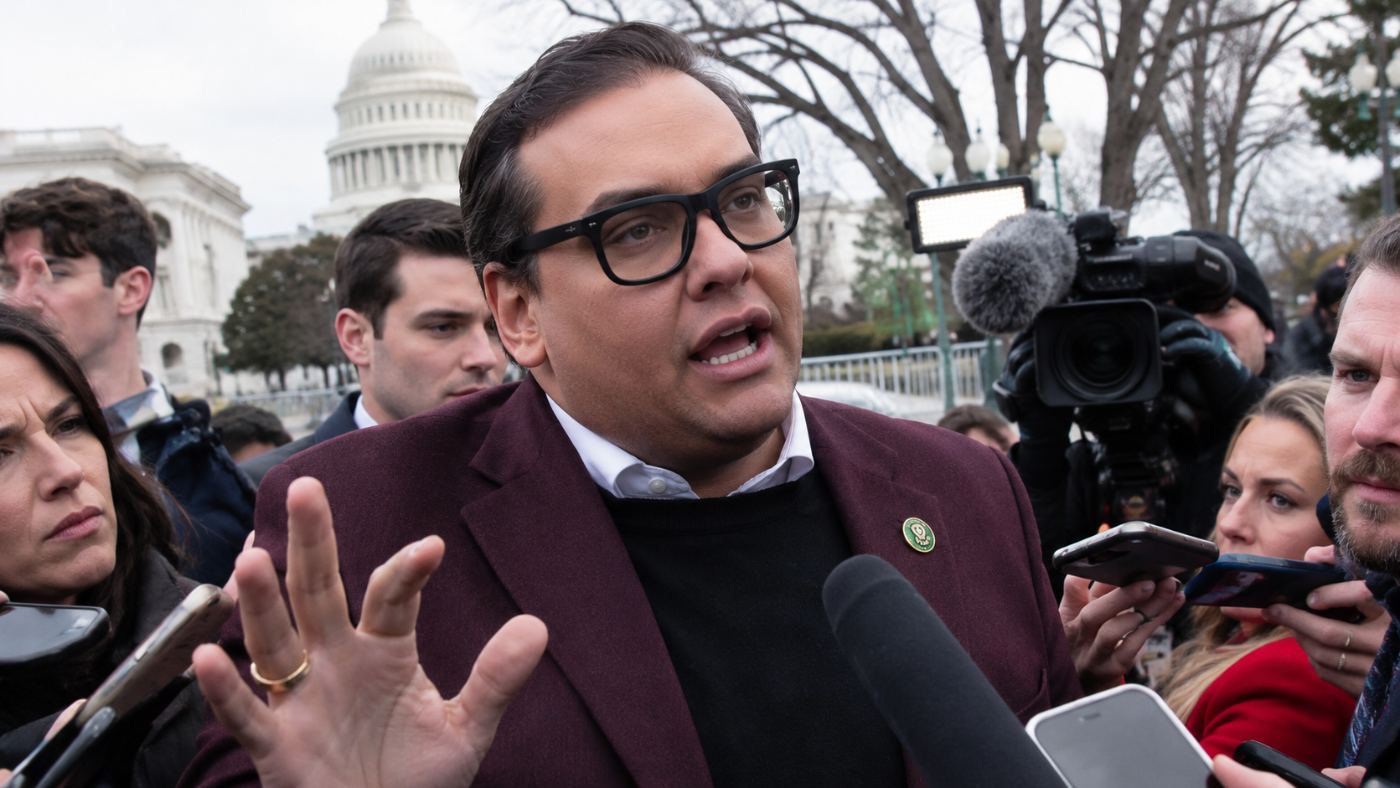
Republican Congressman George Santos faced the possible end of his congressional career on November 30, 2023, as the House of Representatives prepared to vote on expelling him following a devastating ethics investigation that uncovered substantial evidence of financial misconduct, campaign deception, and misuse of political contributions.
The first-term New York Republican, whose congressional career had become engulfed in scandal almost immediately after his election, was confronting an extraordinary rebuke from members of his own party.
A House Ethics Committee investigation had concluded that Santos exploited his congressional campaign for personal financial benefit, repeatedly misled donors, and engaged in conduct that violated the public trust.
The committee's findings were particularly damaging because the investigation was bipartisan.
Republican and Democratic members had unanimously authorized the release of a report describing substantial evidence of misconduct.
Investigators documented allegations that campaign funds had been spent on personal expenses, including luxury purchases, entertainment, and other expenditures unrelated to legitimate political activities.
Among the most widely reported findings were transactions involving designer merchandise, cosmetic treatments, and spending at adult-oriented websites.
The report described a pattern in which Santos allegedly used campaign-related financial arrangements to benefit himself rather than the voters and donors he represented.
The committee also identified misleading financial disclosures and questionable fundraising practices.
According to investigators, Santos repeatedly failed to provide truthful information about his finances and campaign operations.
These findings added to an already extensive record of controversy.
Following his election in November 2022, journalists uncovered numerous discrepancies in Santos's accounts of his education, employment history, family background, and personal accomplishments.
He had claimed to have graduated from Baruch College, but the institution could not verify his attendance.
He had also described employment at major financial institutions, including Goldman Sachs and Citigroup, which those companies could not substantiate.
Other statements about his family history and professional experience were similarly challenged.
Santos subsequently acknowledged that he had embellished portions of his résumé, although he disputed some allegations and defended his right to serve in Congress.
The controversy became more serious when federal prosecutors brought criminal charges against him.
In May 2023, Santos was indicted on charges involving fraud, money laundering, theft of public funds, and false statements.
Additional charges followed in October, including allegations involving identity theft and unauthorized charges to donors' credit cards.
Santos pleaded not guilty and maintained that he intended to defend himself in court.
The criminal charges were allegations, not convictions, at the time of the November 30 developments.
However, the House Ethics Committee conducted a separate investigation under congressional rules and concluded that the evidence supported serious findings of misconduct.
Its November report became the foundation for a renewed effort to remove Santos from office.
Expulsion from the House is an exceptionally rare action.
Under the Constitution, removing a member requires a two-thirds vote of the chamber.
Before the Santos case, only five members had been expelled in the history of the House of Representatives.
Three were removed in 1861 for supporting the Confederacy during the Civil War.
The other two were expelled following criminal convictions involving corruption.
Santos had not been convicted of the federal charges against him when the House considered his removal.
That distinction became central to the debate.
Some lawmakers argued that expelling a member before a criminal conviction could establish a troubling precedent.
Others maintained that the House had an independent constitutional responsibility to evaluate misconduct and protect the integrity of the institution.
The Ethics Committee's findings strengthened the argument that Congress did not need to wait for the criminal justice system to reach a verdict.
By November 30, the political momentum against Santos had grown substantially.
Republicans from New York, including lawmakers representing districts near Santos's Long Island constituency, had been among the most vocal advocates for his removal.
They argued that the continuing scandals damaged public confidence and made it impossible for Santos to represent his constituents effectively.
Democrats also overwhelmingly supported expulsion.
The controversy placed House Republican leadership in a difficult position.
Republicans controlled the chamber by a narrow margin, and removing Santos would temporarily reduce their voting strength.
Nevertheless, the allegations had become so extensive that members from both parties were prepared to support his removal.
Santos continued defending himself.
He criticized the Ethics Committee investigation, disputed its conclusions, and accused fellow lawmakers of attempting to remove him without allowing the criminal proceedings to run their course.
On November 30, he participated in the House debate over the expulsion resolution and maintained that he should not be expelled before being convicted of a crime.
He also indicated that he expected the House to vote against him.
The impending vote represented the culmination of nearly a year of controversy.
Santos had entered Congress in January 2023 promising to represent New York's Third Congressional District.
Instead, his tenure became dominated by questions about his biography, campaign finances, fundraising practices, and credibility.
The Ethics Committee report transformed those controversies into a formal congressional accountability proceeding.
Its findings went beyond inaccurate campaign statements.
Investigators described evidence that political contributions and campaign-related financial arrangements had been used for personal benefit.
That distinction was important because candidates frequently face criticism for exaggerating their accomplishments, but the alleged diversion of campaign funds raised separate questions about financial misconduct.
The committee's report also emphasized the broader consequences for public trust.
Campaign contributors provide money with the expectation that it will support legitimate political activities.
When those funds are allegedly diverted for personal use, the conduct can undermine confidence in campaign finance systems and elected officials.
By the end of November 30, the House was preparing for a vote that could remove Santos from office.
The decisive action came the following day.
On December 1, 2023, the House voted 311–114 to expel Santos, with 105 Republicans joining 206 Democrats in supporting the resolution.
He became the sixth member expelled in the history of the House of Representatives and the first expelled without a prior criminal conviction or involvement in the Civil War.
The December 1 vote confirmed the political consequences of the investigation, but November 30 remained a distinct and significant moment.
It was the day lawmakers publicly debated whether the documented findings of the Ethics Committee justified removing a sitting member before his criminal case concluded.
The episode also illustrated how congressional accountability could become a bipartisan issue even during a period of intense political polarization.
Republicans and Democrats disagreed over many national policies, but substantial numbers from both parties concluded that the allegations against Santos warranted extraordinary action.
For the historical record, November 30, 2023, marked the final full day of George Santos's congressional tenure.
The following day, his colleagues removed him from the House.
His downfall demonstrated the consequences of a political career built amid extensive questions about personal credibility, financial transparency, and the handling of campaign contributions.
What began with revelations about fabricated résumé claims had developed into a federal criminal prosecution, a bipartisan ethics investigation, and ultimately one of the rarest disciplinary actions available to Congress.