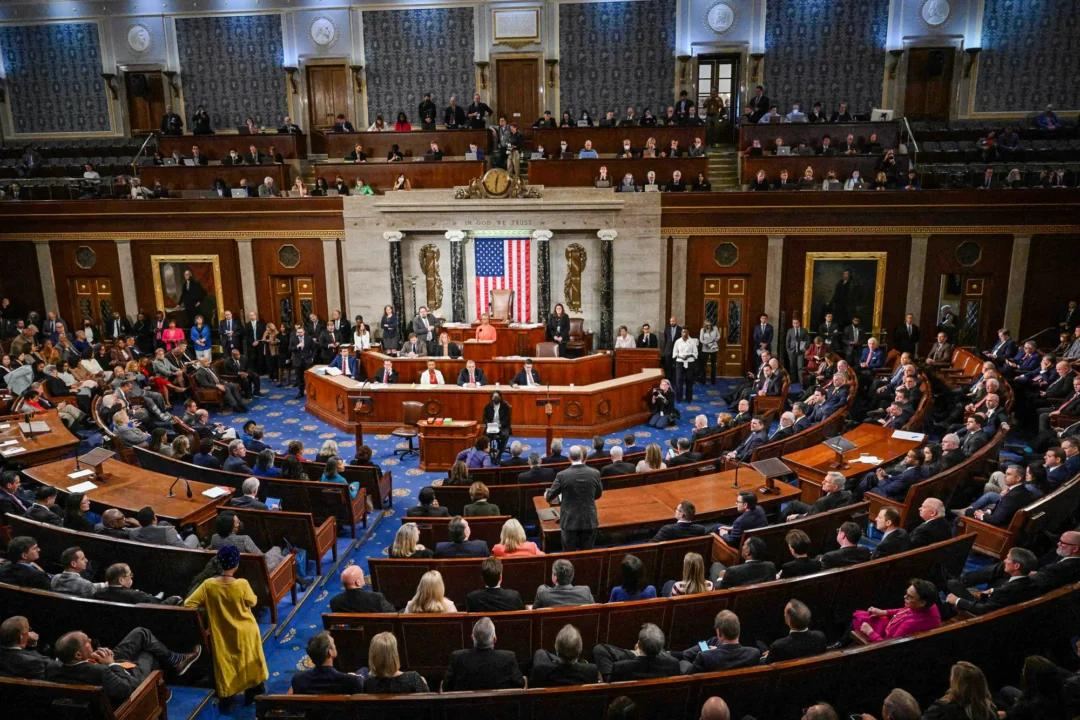
On December 1, 2023, the United States House of Representatives voted overwhelmingly to expel Republican Congressman George Santos of New York, ending a congressional career engulfed in fabricated personal claims, financial misconduct allegations, and federal criminal charges.
The historic vote was 311–114, with 105 Republicans joining 206 Democrats to remove Santos from office.
Santos became only the sixth member of the House of Representatives ever expelled and the first in more than two decades.
A Congressional Career Built on False Claims
Santos entered Congress in January 2023 after winning New York's 3rd Congressional District.
Almost immediately, investigations revealed that significant portions of his personal and professional biography were fabricated.
Santos had falsely claimed to have graduated from prestigious universities, worked for major Wall Street financial institutions, and possessed professional accomplishments that could not be verified.
His claims about his family's history also came under scrutiny.
The revelations raised questions about how a congressional candidate could misrepresent so much of his background without those claims being exposed before Election Day.
Ethics Investigation Uncovers Financial Misconduct
The controversy expanded beyond Santos's false biography.
On November 16, 2023, the bipartisan House Ethics Committee released a report detailing substantial evidence of financial misconduct.
Investigators found that Santos had diverted campaign money for personal expenses, misled donors, reported fictitious campaign loans, and filed inaccurate financial disclosures.
The report described spending on luxury merchandise, casino trips, cosmetic treatments, and an adult-content subscription platform.
Investigators concluded that Santos had exploited his congressional campaign for personal financial benefit.
By then, Santos was also facing a 23-count federal indictment involving fraud, identity theft, and other alleged offenses.
He denied criminal wrongdoing and resisted calls to resign.
Republicans Join Democrats to Remove Santos
Despite the mounting allegations, previous attempts to expel Santos had failed.
Some Republican lawmakers argued that removing an elected representative before a criminal conviction would establish a dangerous precedent.
House Speaker Mike Johnson opposed expulsion, expressing concerns about due process.
But following the Ethics Committee's findings, enough Republicans broke with their party's leadership to support removal.
The final vote easily exceeded the two-thirds majority required by the Constitution.
Santos left the House chamber before the result was announced, ending his congressional service less than one year after taking office.
Santos Later Pleads Guilty
The story did not end with his expulsion.
On August 19, 2024, Santos pleaded guilty to federal wire fraud and aggravated identity theft.
His admission confirmed criminal misconduct involving his campaign finances and the misuse of personal information.
In April 2025, a federal judge sentenced Santos to 87 months in prison and ordered substantial restitution and forfeiture payments.
He began serving his sentence in July 2025.
Trump Commutes Santos's Prison Sentence
On October 17, 2025, President Donald Trump announced that he was commuting Santos's federal prison sentence.
The decision allowed the former Republican congressman to leave prison after serving less than three months of his seven-year-and-three-month sentence.
Trump characterized the punishment as excessive and described Santos as a political rogue.
The commutation did not erase Santos's guilty plea or overturn his criminal convictions.
It did, however, end his imprisonment and eliminate the remaining custodial punishment.
A Historic Congressional Expulsion
The December 1, 2023, vote remains a rare example of Republicans and Democrats joining together to remove one of their own colleagues.
Santos's expulsion demonstrated Congress's constitutional authority to discipline members for serious misconduct, even before a criminal conviction.
His subsequent guilty plea established that the financial wrongdoing at the center of the controversy was not merely a political allegation.
Yet his eventual release through presidential clemency added another chapter to an already extraordinary political scandal.
What began with fabricated credentials and questionable campaign finances ended with expulsion, federal convictions, imprisonment, and a presidential commutation.
The December 1 vote remains one of the most significant congressional accountability actions in modern American history.