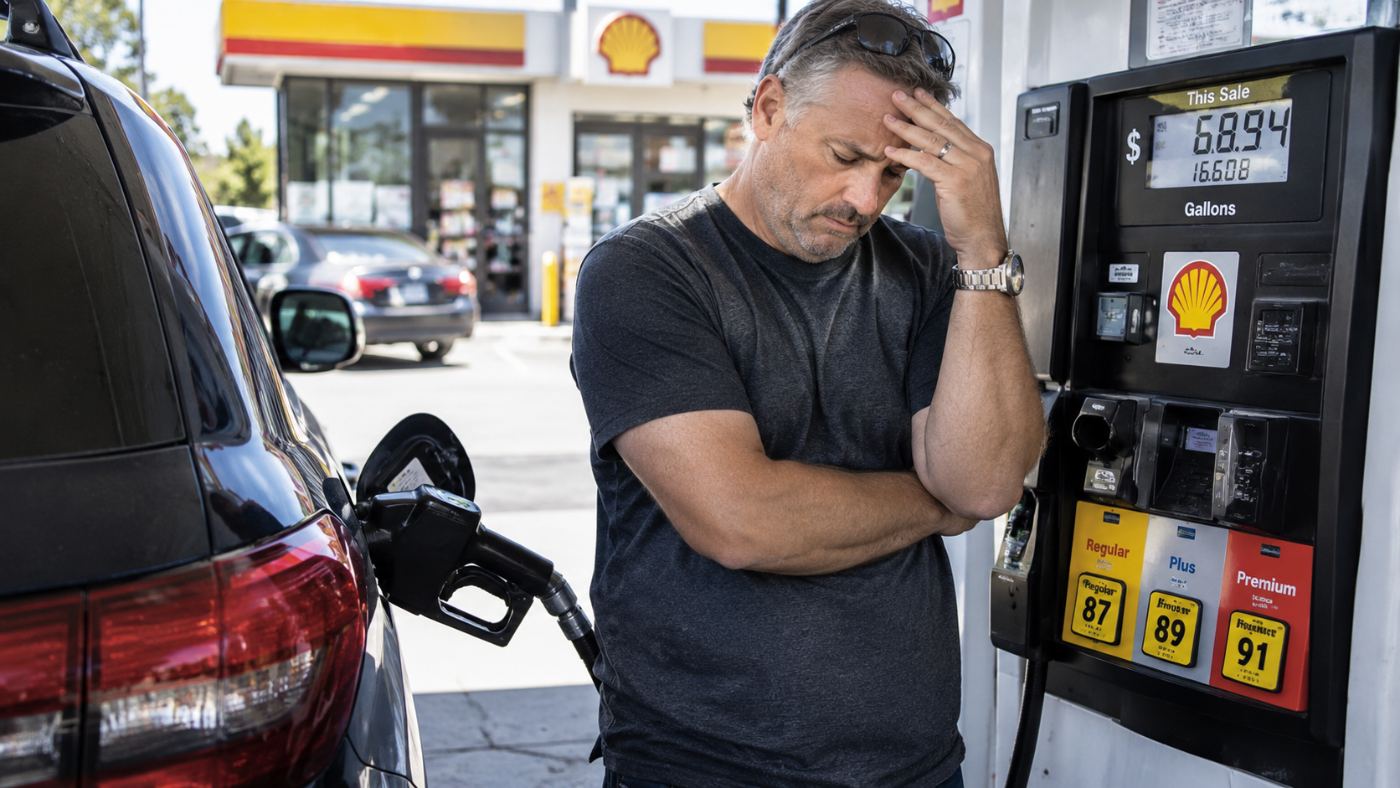
After months of elevated gasoline prices driven by President Donald Trump's war with Iran, American motorists are finally seeing some relief. But a leading energy analyst says that relief could have arrived months earlier.
Patrick De Haan, head of petroleum analysis at GasBuddy, argues that the Trump administration's failure to resolve tensions with Iran sooner unnecessarily prolonged high gasoline prices for millions of Americans.
The criticism raises an uncomfortable question for the White House: How much did American families pay because of decisions made in Washington?
Trump's Iran War Sends Gas Prices Soaring
On February 28, 2026, the United States and Israel launched military strikes against Iran, triggering a conflict that disrupted global energy markets.
Iran responded by restricting shipping through the Strait of Hormuz, a critical passage for approximately one-fifth of the world's oil supply.
The consequences quickly reached American gas stations.
Before the conflict began, regular gasoline averaged approximately $2.98 per gallon nationally.
Prices subsequently surged, reaching approximately $4.48 per gallon in September.
For families commuting to work, transporting children, or operating small businesses, those increases represented a substantial additional expense.
Higher transportation costs also affected businesses moving goods across the country, contributing to broader inflationary pressures.
Energy Analyst Says Relief Could Have Come Earlier
As gasoline prices began declining in November, De Haan challenged the administration's handling of the crisis.
He argued that resolving tensions with Iran sooner would have allowed prices to fall earlier.
According to De Haan, prolonged uncertainty surrounding Iran and the Strait of Hormuz kept pressure on global oil markets.
His assessment directly challenges the idea that high gasoline prices were simply an unavoidable consequence of international events.
The conflict began with military action authorized by Trump's administration, and its continuation helped sustain uncertainty in global energy supplies.
However, gasoline prices are also influenced by seasonal demand, refining costs, inventories, and international oil production.
Americans Paid the Price
By November 17, the national average had fallen to approximately $3.78 per gallon, according to AAA.
That represented substantial relief from September's peak, but gasoline remained considerably more expensive than before the war.
For a household purchasing 50 gallons weekly, the difference between $2.98 and $4.48 per gallon amounts to an additional $75 every week.
Over several months, those costs can become a serious financial burden.
And gasoline is only one part of the equation.
Higher fuel prices can increase delivery expenses, transportation costs, and the prices consumers pay for everyday products.
Trump Acknowledges the Political Consequences
Following Republican losses in the November midterm elections, Trump acknowledged that higher gasoline prices associated with the Iran conflict had contributed to voter dissatisfaction.
However, he defended the military campaign, arguing that confronting Iran was necessary to prevent it from acquiring nuclear weapons.
The administration maintains that its actions served American national security interests.
Critics counter that the economic consequences were substantial and that opportunities to reduce tensions should have been pursued sooner.
A Costly Lesson for American Families
Gasoline prices are finally declining, helped by improving oil supplies, seasonal changes, and reduced expectations of further military escalation.
But lower prices today do not erase the additional money Americans spent throughout the year.
De Haan's criticism highlights the connection between presidential foreign-policy decisions and household expenses.
The administration may celebrate falling gasoline prices, but millions of Americans have already paid the financial price of a prolonged international conflict.
And that money isn't coming back.