American diplomats were supposed to be protecting U.S. national security interests in Ukraine. Instead, congressional investigators were uncovering a separate diplomatic effort involving investigations sought by President Donald Trump's political allies.
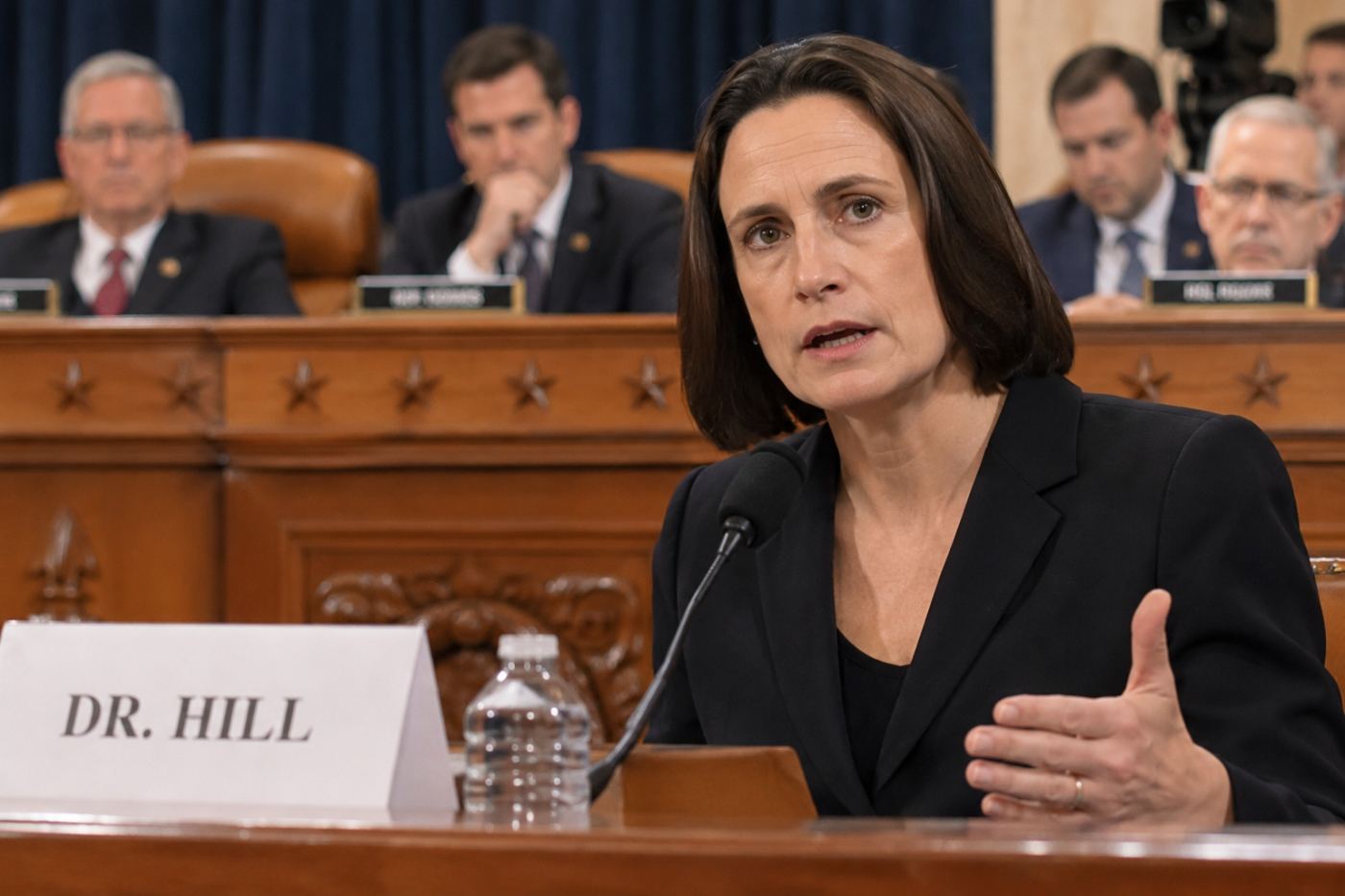
On November 21, 2019, former White House national security adviser Fiona Hill testified before Congress about the competing agendas operating inside Trump's administration.
Her testimony exposed a troubling division between established American foreign policy and an effort to obtain politically sensitive investigations from Ukraine.
Two Diplomatic Missions, Two Different Agendas
Hill had served as the National Security Council's senior director for European and Russian affairs.
Her responsibilities included strengthening American relationships with European allies and supporting Ukraine against Russian aggression.
But Hill testified that Ambassador Gordon Sondland was pursuing a different objective.
Sondland, Trump's ambassador to the European Union, had become involved in efforts to secure Ukrainian announcements concerning investigations sought by Trump's personal attorney, Rudy Giuliani.
Those investigations included matters involving former Vice President Joe Biden's family and allegations about interference in the 2016 presidential election.
Hill described Sondland's activities as a domestic political errand, distinguishing them from the national security work she and other officials were conducting.
Working at Trump's Direction
Sondland had testified the previous day that Trump instructed him and other officials to coordinate with Giuliani.
Giuliani was demanding that Ukraine publicly announce investigations before its president received a coveted White House meeting.
Sondland acknowledged that the arrangement amounted to a quid pro quo involving the meeting.
Hill's testimony added important context.
She explained that Sondland's activities were operating outside the normal national security process, creating confusion among officials responsible for American policy toward Ukraine.
The controversy was not simply a disagreement over diplomatic tactics.
It concerned whether official American government relationships were being used to pursue investigations with potential domestic political benefits.
Hill Warned the Situation Would Explode
Hill recalled confronting Sondland about his activities.
She warned him that the approach was dangerous and could create serious consequences.
According to Hill, Sondland insisted that he was acting under presidential authority.
Hill explained that she had initially misunderstood the nature of his assignment.
Once she recognized that Sondland was pursuing a political objective rather than conventional diplomatic policy, the distinction became clear.
The ambassador was not carrying out the same mission as the national security officials working through established channels.
Ukraine's Security Was at Stake
The dispute unfolded while Ukraine was confronting Russian military aggression.
The Trump administration had temporarily withheld nearly $400 million in congressionally approved security assistance.
House investigators were examining whether that assistance, along with a White House meeting, had been connected to demands for Ukrainian investigations.
Sondland testified that he believed the military aid was conditioned on an investigation announcement, although Trump had not personally communicated that condition to him.
Trump denied wrongdoing and maintained that his dealings with Ukraine were appropriate.
Nevertheless, the testimony revealed how political demands had become intertwined with diplomatic discussions involving an American ally dependent on U.S. assistance.
The Impeachment Investigation Reveals the Divide
Hill's November 21 testimony became part of the evidence considered during Trump's first impeachment.
The House ultimately impeached Trump in December 2019 for abuse of power and obstruction of Congress.
The Senate acquitted him in February 2020.
But the distinction Hill described remained central to understanding the Ukraine controversy.
Career national security officials were working to advance American diplomatic and security objectives.
At the same time, another group of presidential representatives was pursuing politically sensitive investigations through communications with Ukrainian officials.
On November 21, 2019, Hill's testimony placed that conflict before the American public and Congress, raising fundamental questions about the use of presidential authority and American foreign policy for domestic political purposes.