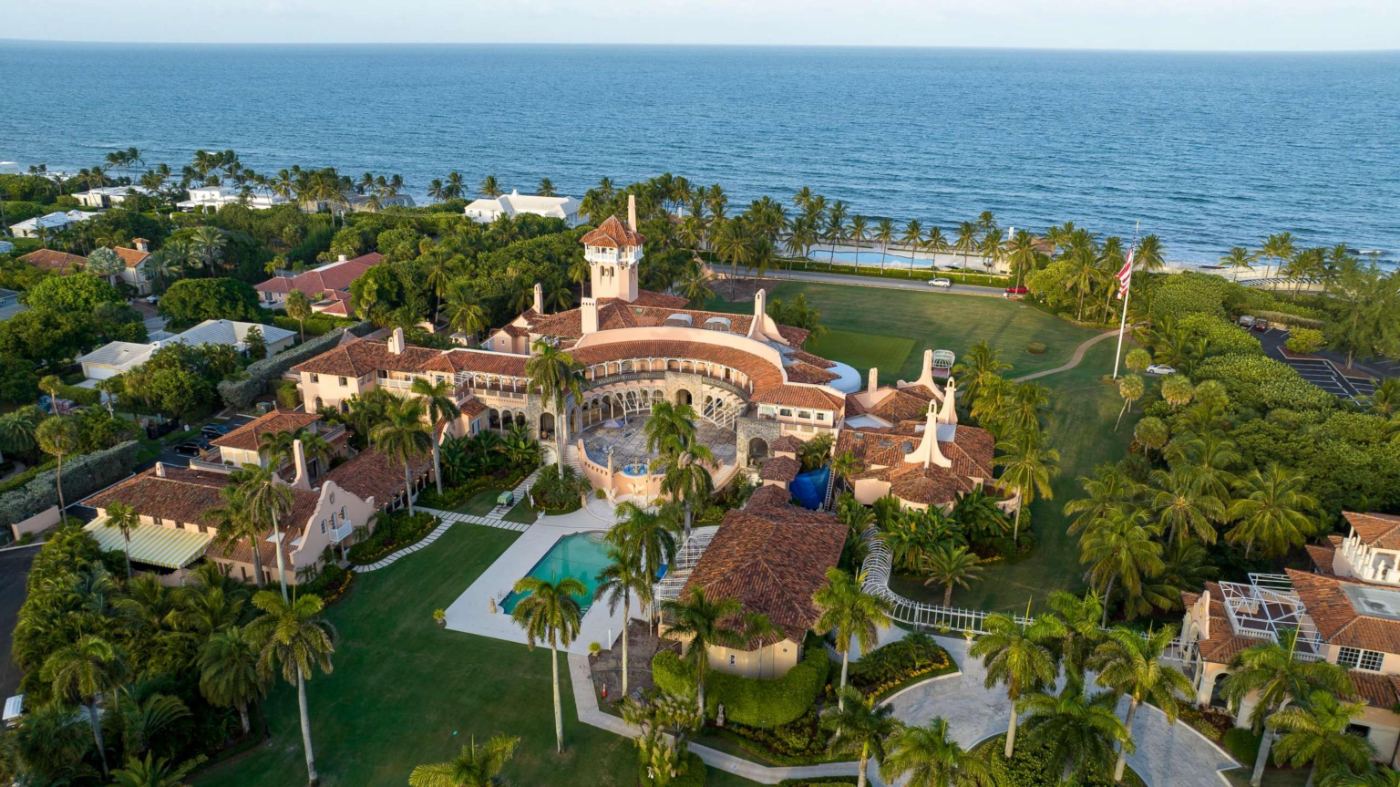
On December 1, 2022, a federal appeals court unanimously overturned a ruling that had allowed former President Donald Trump to delay portions of the Justice Department's investigation into classified documents recovered from his Mar-a-Lago estate.
The three-judge panel of the U.S. Court of Appeals for the 11th Circuit rejected the appointment of a special master to review thousands of documents seized during an FBI search.
The decision was particularly notable because two of the three judges had been appointed by Trump himself.
Classified Documents Discovered at Mar-a-Lago
The investigation began after the National Archives spent months attempting to recover presidential records that had been transferred to Trump's Florida residence when he left office.
In January 2022, Trump returned 15 boxes of records. Archivists discovered that some contained classified government information.
Federal investigators subsequently obtained evidence suggesting additional sensitive documents remained at Mar-a-Lago.
On August 8, 2022, FBI agents executed a court-authorized search warrant.
They recovered approximately 13,000 documents, including more than 100 bearing classification markings.
Some materials were marked confidential, secret, or top secret.
A Trump-Appointed Judge Intervenes
Following the search, Trump filed a lawsuit requesting an independent reviewer, known as a special master, to examine the seized materials.
His attorneys argued that some documents might be protected by attorney-client or executive privilege.
U.S. District Judge Aileen Cannon, whom Trump had appointed in 2020, granted the request in September.
She appointed retired federal judge Raymond Dearie to conduct the review and temporarily restricted investigators' use of seized materials.
The Justice Department challenged her ruling, arguing that the intervention was legally unjustified and interfered with an ongoing criminal investigation.
Appeals Court Rejects Special Treatment
On December 1, the 11th Circuit sided with federal prosecutors.
The panel consisted of Chief Judge William Pryor, appointed by President George W. Bush, and Judges Britt Grant and Andrew Brasher, both appointed by Trump.
Their unanimous opinion concluded that Cannon had improperly exercised jurisdiction over the case.
The judges rejected the argument that Trump's former presidential status justified extraordinary judicial intervention.
They explained that federal courts could not establish a special rule allowing former presidents to interfere with criminal investigations after a lawful search warrant had been executed.
The ruling vacated Cannon's September order and directed dismissal of Trump's civil lawsuit.
A Major Development for Federal Investigators
The decision removed the special-master review that had complicated the Justice Department's examination of the seized records.
Investigators could proceed without the additional court-supervised process Trump had requested.
The ruling did not determine whether Trump had committed a crime. Instead, it addressed whether the lower court possessed the legal authority to intervene in the investigation.
Nevertheless, the decision represented an important legal development because it rejected the unusual protections Trump had obtained from a federal judge he appointed.
The Investigation Continued
Special Counsel Jack Smith, appointed in November 2022, subsequently oversaw the classified-documents investigation.
In June 2023, federal prosecutors charged Trump with offenses involving his retention of national defense information and alleged obstruction of efforts to recover government records.
Trump pleaded not guilty and denied wrongdoing.
In July 2024, Judge Cannon dismissed the indictment on grounds related to Smith's appointment.
The criminal charges were never resolved by a trial verdict.
A Significant December 1 Ruling
The December 1, 2022, decision established that Trump's status as a former president did not automatically entitle him to extraordinary judicial protections unavailable to other people subject to federal investigations.
Three Republican-appointed judges, including two selected by Trump, unanimously rejected the lower court's intervention.
Their ruling reinforced the principle that federal courts must follow established jurisdictional limits, regardless of the prominence or former office of the person under investigation.
It remains an important moment in the legal history of the Mar-a-Lago classified-documents investigation.