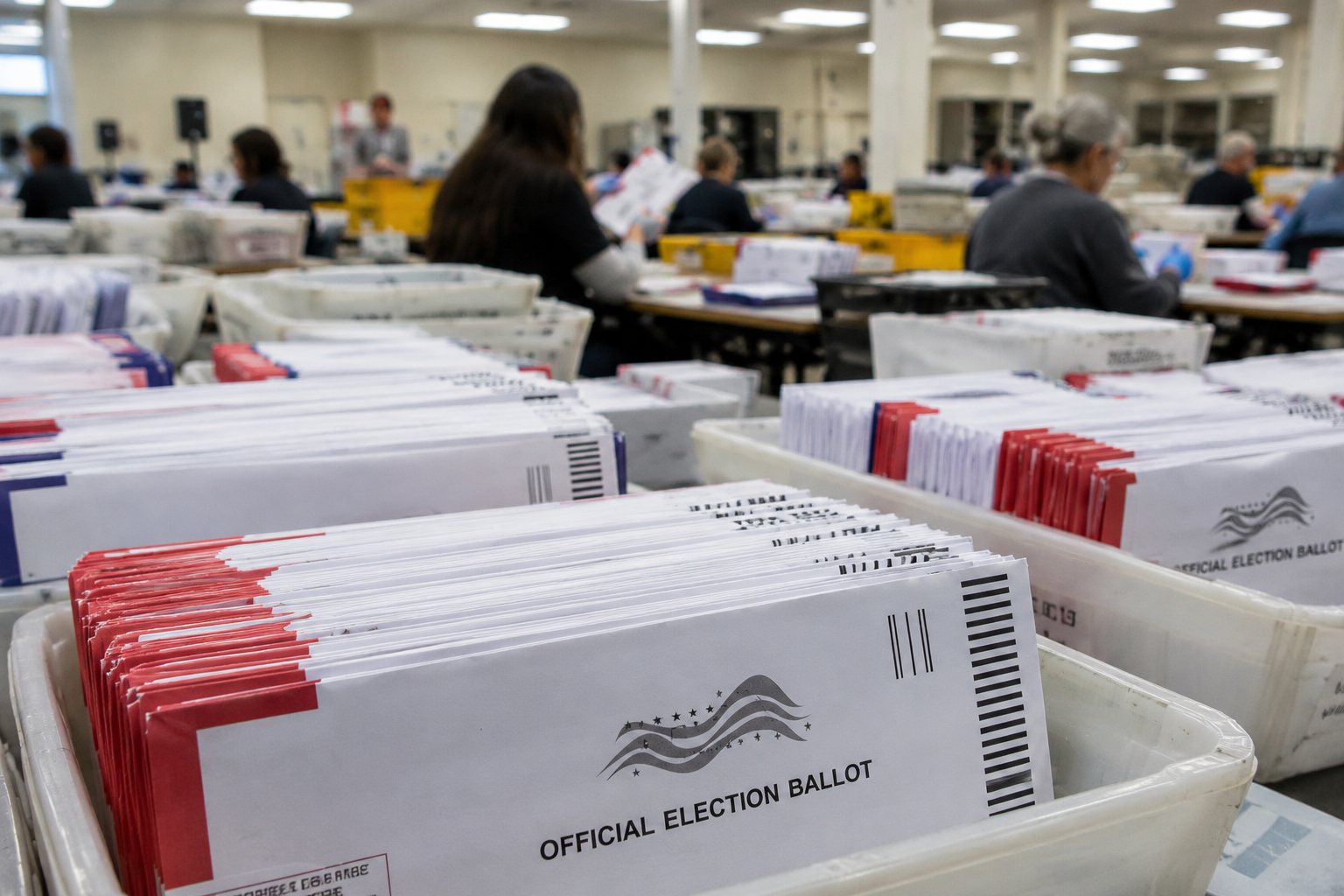
A federal appeals court delivered a significant setback to the Trump administration Monday, rejecting an emergency attempt by the Justice Department to force California election officials to set aside approximately 20,000 ballots from voters the federal government claims may not be U.S. citizens.
In a 2-1 decision, the U.S. Court of Appeals for the Ninth Circuit dismissed the administration's appeal, ruling that federal attorneys had improperly attempted to bypass the lower court before it had an adequate opportunity to consider their request.
The decision comes just eight days before the November 3 midterm elections, with millions of Californians already casting their ballots.
An Election Emergency of Trump's Own Making
The Justice Department filed its lawsuit earlier this month, seeking to prevent California from counting ballots associated with approximately 20,000 individuals identified through federal data as potentially ineligible voters.
California officials challenged the reliability of that information, warning that the administration's demands could prevent eligible American citizens from having their votes counted.
Rather than wait for a federal district judge to rule, Justice Department attorneys sought emergency intervention from the appeals court.
The judges were unimpressed.
In their ruling, the majority described the administration's supposed emergency as at least partially self-created, pointing to delays by federal attorneys and their failure to account for California's established election procedures.
The court also criticized the administration for pursuing extraordinary intervention after voting had already begun.
Even a Trump-Appointed Judge Rejected the Administration's Arguments
The ruling was supported by Judge Mark Bennett, appointed by Donald Trump, and Judge Gabriel Sanchez, appointed by former President Joe Biden.
Both judges expressed serious concerns extending beyond the procedural problems that required dismissal.
Bennett questioned whether the executive branch possessed the constitutional authority to impose new election procedures on California.
Under the Constitution's Elections Clause, states establish the rules governing congressional elections, subject to congressional oversight. The president does not possess independent authority to rewrite those rules.
Bennett also warned that the administration had failed to provide a workable plan for separating thousands of ballots without potentially disrupting California's election.
Judge Patrick Bumatay, another Trump appointee, dissented, arguing that the federal government had a legitimate interest in preventing noncitizens from participating in federal elections.
California Warns of Widespread Voter Disenfranchisement
California election officials argued that the administration's demands would introduce extraordinary complications into an election already underway.
State officials maintained that the federal government's list of suspected noncitizens contained unreliable information and could include legally registered American voters.
Forcing counties to identify, isolate, and verify thousands of ballots shortly before Election Day, they argued, could disrupt vote counting and undermine public confidence in the election.
The administration has not established that all 20,000 individuals identified in its lawsuit are noncitizens or that they have illegally voted.
Although federal authorities have announced criminal charges against 28 individuals from the broader list, those allegations do not establish widespread illegal voting or justify treating every flagged voter as ineligible.
Part of a Broader Campaign Targeting State Elections
The California lawsuit is part of a much larger effort by the Trump administration to expand federal involvement in state election administration.
The Justice Department has filed lawsuits against numerous states seeking access to detailed voter registration records, including sensitive personal information.
State officials have resisted many of those demands, citing privacy protections, federalism concerns, and the absence of sufficient legal justification.
Federal courts have repeatedly rejected the administration's attempts to obtain unrestricted voter information.
California Governor Gavin Newsom welcomed Monday's ruling, accusing Trump of attempting to seize election powers reserved for other branches and levels of government.
The Justice Department maintains that its actions are necessary to protect election integrity and prevent illegal voting.
However, documented noncitizen voting remains extremely rare, and the administration has not demonstrated that the alleged problem exists on anything approaching the scale suggested by its sweeping demands.
The Battle Is Not Over
Monday's ruling does not end the underlying lawsuit. A federal district court hearing remains scheduled for Tuesday, where the administration's request for emergency restrictions will receive further consideration.
But the appeals court's decision represents another obstacle for an administration attempting to impose last-minute changes on state election procedures.
With Election Day rapidly approaching, the central concern is no longer simply whether election officials can identify potentially ineligible voters.
It is whether the federal government can demand sweeping changes to an ongoing election based on disputed evidence, potentially placing thousands of legitimate votes at risk.
For now, California's established voting procedures remain in place, and the Trump administration has failed to persuade the appeals court to intervene.