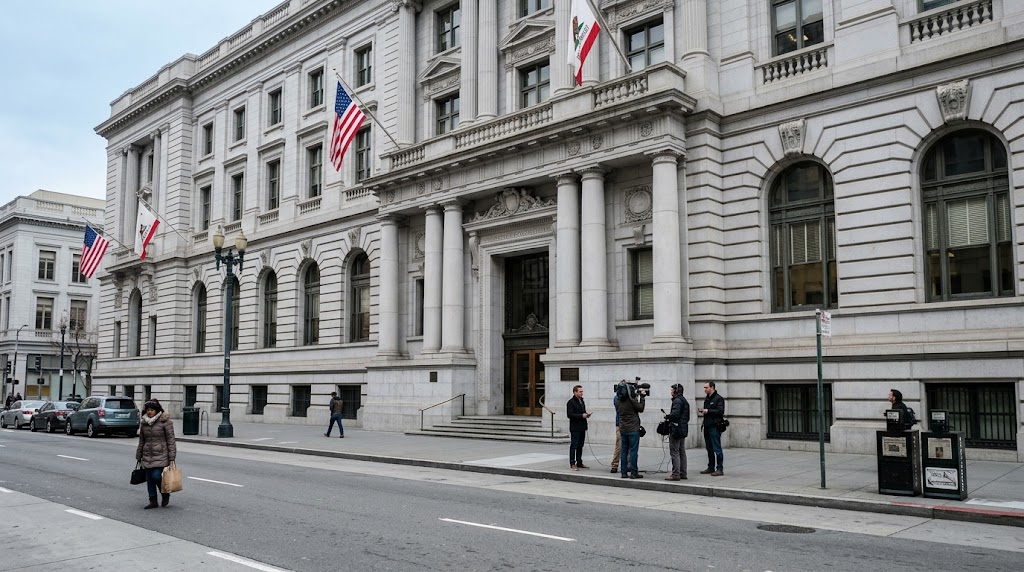
Less than three weeks into Donald Trump's presidency, his administration suffered one of its first major defeats in federal court.
On February 9, a three-judge panel of the U.S. Court of Appeals for the Ninth Circuit unanimously rejected the administration's emergency request to restore Trump's controversial travel restrictions while a legal challenge proceeded.
The ruling left in place a federal judge's temporary restraining order blocking key portions of Trump's January 27 executive order.
For an administration that had moved quickly to exercise presidential authority over immigration, the decision delivered an early reminder: executive orders remained subject to judicial review.
The Travel Ban Had Already Created Chaos
Trump's January 27 executive order temporarily suspended entry into the United States for nationals of seven countries: Iran, Iraq, Libya, Somalia, Sudan, Syria and Yemen.
It also suspended the U.S. refugee admissions program for 120 days and halted admission of Syrian refugees indefinitely.
Implementation was immediate.
Travelers were prevented from boarding flights, visas were canceled and some people arriving at American airports were detained.
Legal challenges quickly followed.
Washington state sued the administration, later joined by Minnesota, arguing that portions of the executive order violated federal law and constitutional protections.
On February 3, U.S. District Judge James Robart issued a temporary restraining order that stopped enforcement of significant portions of Trump's order nationwide.
The Trump administration immediately appealed.
The Administration Asks for Emergency Intervention
The Justice Department asked the Ninth Circuit to stay Robart's order, which would have allowed the administration to resume enforcement while the case continued.
Three appellate judges considered the request.
On February 9, they unanimously rejected it.
The judges concluded that the federal government had not demonstrated a likelihood of succeeding on the merits of its appeal at that preliminary stage.
They also rejected the government's argument that the president's immigration and national-security decisions were effectively beyond meaningful judicial review.
The court emphasized that although presidents receive substantial deference in immigration and national-security matters, federal courts retain the authority to consider constitutional challenges to executive actions.
That principle became one of the most important elements of the decision.
Questions About Due Process
The judges also identified serious due-process concerns.
The executive order had affected people who previously had permission to enter or remain in the United States, including lawful permanent residents and visa holders.
The court concluded that the states had presented substantial arguments that affected individuals were entitled to procedural protections.
The judges additionally noted significant constitutional questions surrounding allegations of religious discrimination, although they did not issue a final ruling on that issue.
The February 9 decision was therefore not a final judgment declaring Trump's travel ban unconstitutional.
It was a decision about whether the administration had justified immediately restoring the restrictions while litigation continued.
It had not.
An Early Test of Presidential Power
The significance extended beyond immigration policy.
Trump had entered office promising rapid executive action on immigration, national security and numerous other issues. The travel order demonstrated how quickly that approach could collide with another branch of government.
The federal judiciary was asserting that claims of presidential authority and national security did not automatically prevent courts from examining whether executive actions complied with the Constitution.
The administration strongly disagreed with the ruling.
Trump responded publicly within minutes, writing in capital letters on social media:
“SEE YOU IN COURT.”
But the administration ultimately did not obtain reinstatement of the original January order.
Instead, Trump issued a revised executive order on March 6 that eliminated Iraq from the list of affected countries, changed several provisions and revoked the original order.
The First Version Never Recovered
The broader legal battle over Trump's immigration restrictions would continue for more than a year and eventually reach the Supreme Court.
In 2018, the Supreme Court upheld a substantially revised version of Trump's entry restrictions in Trump v. Hawaii.
That later victory did not change what happened to Trump's original order in February 2017.
The first version had been introduced with extraordinary speed, immediately generated nationwide litigation and was blocked by a federal district judge.
When the administration asked an appellate court to restore it, three judges unanimously said no.
For a presidency only weeks old, it was an important early demonstration of the limits that the federal courts could place on executive power.