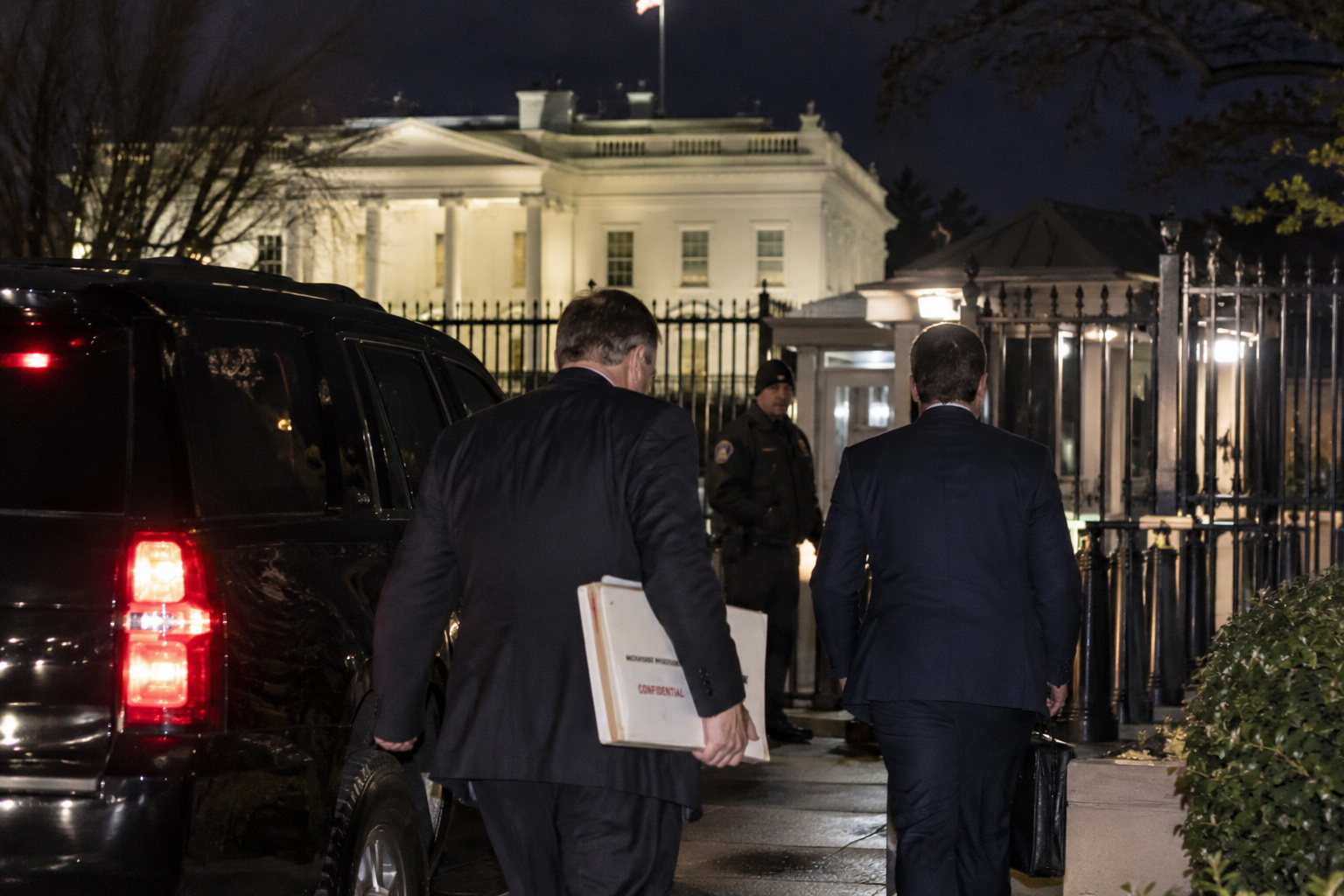
In the early morning hours of October 4, 2018, the FBI completed its supplemental background investigation into Supreme Court nominee Brett Kavanaugh and delivered its findings to the Trump White House and Senate.
The investigation had been ordered amid allegations of sexual misconduct against Kavanaugh, including an accusation from Christine Blasey Ford that Kavanaugh had sexually assaulted her when they were teenagers.
Kavanaugh categorically denied Ford's allegation and other accusations against him.
The FBI investigation was supposed to provide senators with additional information before one of the most contentious Supreme Court confirmation votes in modern American history.
The Trump White House quickly declared itself satisfied.
Principal Deputy Press Secretary Raj Shah announced that the White House had received the report and remained "fully confident" that Kavanaugh would ultimately be confirmed.
Democrats saw the investigation very differently.
An Investigation Lasting Less Than a Week
The supplemental FBI investigation resulted from the dramatic September 27 Senate Judiciary Committee hearing at which both Ford and Kavanaugh testified.
Ford told senators that Kavanaugh had sexually assaulted her at a gathering when the two were teenagers.
Kavanaugh forcefully denied the accusation.
After the hearing, Republican Sen. Jeff Flake called for an additional FBI investigation before the Senate proceeded to a final confirmation vote.
The White House subsequently authorized the FBI to conduct the supplemental background investigation.
By October 4, it was finished.
According to a Senate Judiciary Committee summary, the FBI reached out to 11 people and interviewed 10.
But two particularly prominent people were not interviewed:
Brett Kavanaugh and Christine Blasey Ford.
Democrats Say the Investigation Was Too Limited
That immediately became a major point of contention.
Democratic members of the Senate Judiciary Committee issued a joint statement arguing that the documents suggested the investigation had been "controlled and directed by the White House."
They complained that Kavanaugh and Ford had not been interviewed and said attorneys for Ford and Deborah Ramirez had provided lists of potential witnesses who were never contacted.
Sen. Dianne Feinstein, the committee's ranking Democrat, called the investigation "incomplete" and "limited."
Democrats argued that the FBI had been given too little time and too narrow a mandate to fully investigate the allegations.
The White House rejected those criticisms.
Trump publicly maintained that the FBI had been given authority to interview anyone it considered appropriate within the scope of the supplemental investigation.
Republicans Say the Allegations Remain Uncorroborated
Republicans reviewing the FBI material reached a very different conclusion.
Senate Judiciary Committee Chairman Chuck Grassley said the supplemental investigation had produced no new corroboration of the allegations against Kavanaugh.
A Republican committee summary stated that the FBI had contacted witnesses believed to have potential firsthand knowledge and concluded that the supplemental investigation did not corroborate the allegations made by Ford or Ramirez.
The disagreement therefore wasn't simply over what the FBI had discovered.
It was over whether the FBI had been allowed to look hard enough in the first place.
Senators Read the Report Under Tight Security
The report itself was not simply distributed around Capitol Hill.
Because FBI background-investigation files are confidential, the material was kept in the Office of Senate Security.
All 100 senators were permitted access, along with a small number of cleared staff members.
CBS News reported that senators reviewed the material in a secure room in the Capitol basement, with lawmakers given scheduled periods to examine the report.
Outside that room, however, the political battle was already raging.
Republicans pointed to the investigation as another reason to move ahead with Kavanaugh's confirmation.
Democrats argued that completing an investigation quickly meant little if investigators had been prevented from pursuing potentially important witnesses and leads.
Trump Gets His Supreme Court Nominee
The FBI report did not end the controversy.
It accelerated the final battle.
The Senate proceeded toward a confirmation vote, and two days later, on October 6, Brett Kavanaugh was confirmed to the Supreme Court by a vote of 50-48.
Trump had secured his second Supreme Court justice.
But the supplemental FBI investigation would remain controversial long after Kavanaugh joined the Court.
Years later, Democratic senators continued investigating how the 2018 background check had been conducted and whether information submitted to the FBI had been adequately examined.
For the Trump White House, however, the message on October 4, 2018, was clear.
The FBI investigation was finished.
The administration said it remained "fully confident" in Kavanaugh.
And the Senate was moving toward a vote that would place him on the Supreme Court for life.