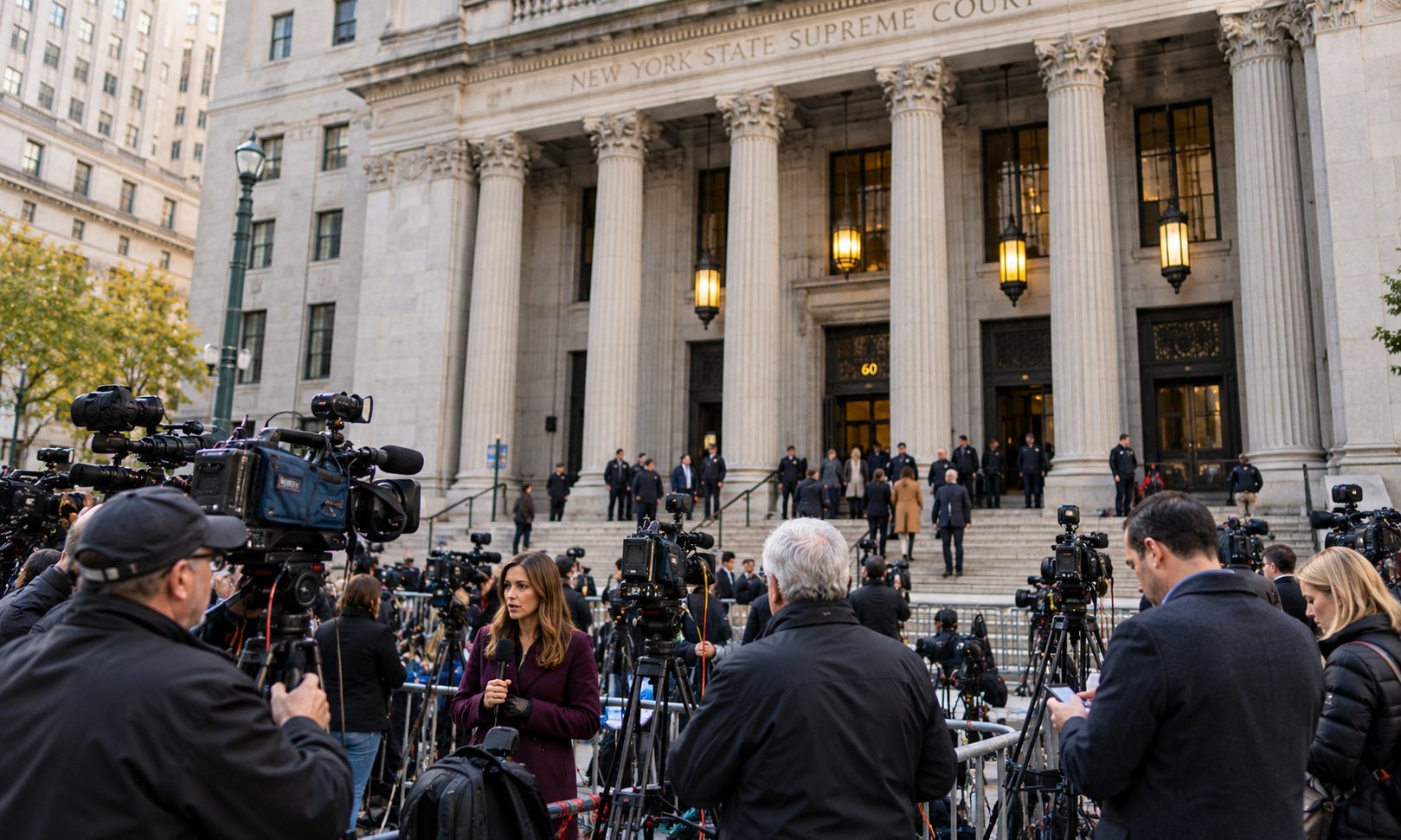
Eric Trump returned to the witness stand Friday in New York's $250 million civil fraud trial, insisting that he relied on accountants and attorneys to ensure the accuracy of financial statements that prosecutors say dramatically inflated his father's wealth.
The testimony marks the second consecutive day of questioning for the Trump Organization executive vice president, who helps oversee the family's real estate empire alongside his older brother, Donald Trump Jr.
New York Attorney General Letitia James accuses former President Donald Trump, his adult sons, and their company of exaggerating property values and financial assets to obtain favorable terms from banks and insurance companies.
The case places the family's business practices under scrutiny as Donald Trump prepares to testify next week.
Eric Trump Distances Himself From Financial Records
During Friday's questioning, Eric Trump maintained that preparing and verifying financial statements was not part of his responsibilities.
"I rely on the accounting office," he told the court.
Prosecutors questioned him about documents certifying financial information provided to Deutsche Bank, including what steps he took to verify their accuracy before signing.
Eric Trump said he depended on professionals responsible for the company's financial reporting.
His testimony follows Thursday's questioning about property valuations, including the Trump family's Seven Springs estate and a golf club development in Westchester County.
Prosecutors presented emails and other records indicating that Eric Trump participated in discussions involving appraisals and property values. He repeatedly said he could not recall particular conversations or details.
When confronted with testimony about a 2021 conference call concerning his father's financial statements, Eric Trump said he had no memory of the discussion.
Judge Has Already Found Fraud
The trial follows a significant pretrial ruling by Judge Arthur Engoron, who determined in September that Donald Trump and other defendants had committed persistent fraud by overstating asset values in financial statements.
The current proceedings are examining additional allegations and determining what financial penalties and other remedies may be appropriate.
Attorney General James is seeking approximately $250 million in penalties and restrictions on the Trump family's ability to conduct business in New York.
The defendants deny wrongdoing and argue that the valuations were legitimate, that financial institutions performed their own assessments, and that lenders suffered no losses.
The case is a civil proceeding, meaning it does not involve criminal charges or the possibility of imprisonment.
Trump Family Attacks the Proceedings
Outside the courthouse, Eric Trump criticized the lawsuit, describing it as a politically motivated attack against his family.
He expressed confidence that the defendants would prevail, insisting they had done nothing wrong.
Meanwhile, Judge Engoron expanded restrictions on public comments about his court staff after repeated allegations from Trump's attorneys concerning the judge's principal law clerk.
The judge warned that violations could result in serious sanctions.
With testimony from Eric Trump and Donald Trump Jr. now concluded, attention turns to their father, who is scheduled to take the witness stand Monday.
The proceedings continue to examine whether the Trump family's representations of its wealth were knowingly misleading and what consequences should follow from the financial practices already found fraudulent by the court.