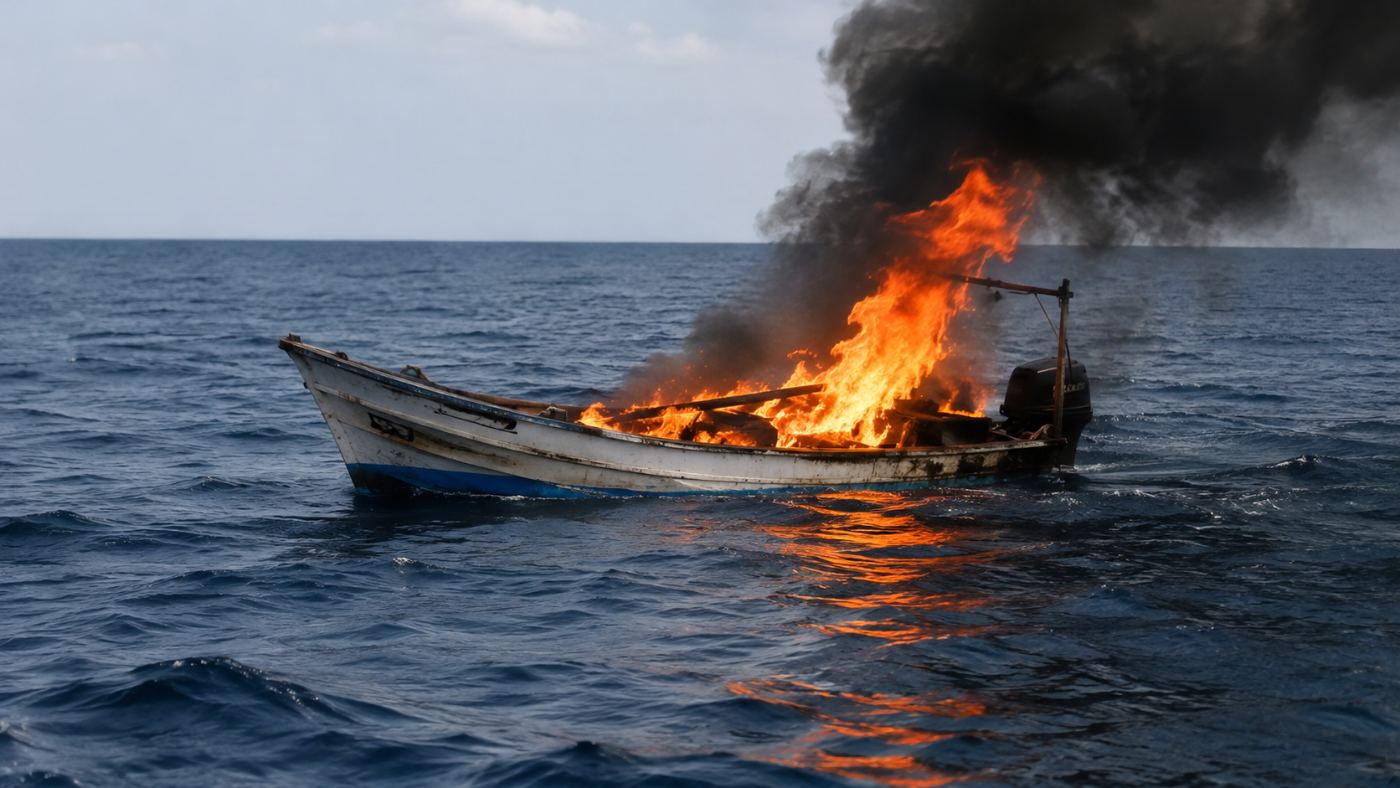
Sixteen Ecuadorian fishermen have filed a federal lawsuit against the United States, alleging that American drones attacked their fishing vessel, set it ablaze, seriously injured two crew members, and left the survivors detained under armed guard.
The lawsuit, filed November 16 in federal court in Pennsylvania, seeks $5 million in damages and a court order stopping further American attacks against suspected drug-trafficking vessels in the Caribbean and Pacific.
The fishermen insist they were innocent civilians simply trying to earn a living.
A Fishing Trip Turns Into a Nightmare
On March 17, 2026, the crew of the La Negra Francisca Duarte II was returning from a fishing expedition near Ecuador's Galápagos Islands.
According to their lawsuit, two explosive drones struck the vessel, causing a devastating fire.
Two fishermen suffered severe burns. One reportedly sustained injuries so serious that the burns reached the bone.
The crew abandoned their burning vessel and escaped in emergency boats.
The fishermen say Ecuador's navy had inspected their boat the previous day and found no evidence of criminal activity.
Despite that inspection, they allegedly became targets of a military-style attack.
Survivors Say They Were Detained
After escaping the burning boat, the fishermen approached another vessel, hoping for assistance.
Instead, according to their complaint, they encountered armed personnel wearing military-style uniforms, some displaying American insignia.
The survivors allege that personnel restrained them with plastic ties, covered their heads, and subsequently transferred them to Salvadoran authorities.
They were transported to El Salvador and detained before eventually being returned to Ecuador.
The fishermen describe physical injuries, psychological trauma, and the destruction of the vessel that supported their families.
None has been publicly shown to have participated in drug trafficking.
The Trump Administration's Boat-Strike Campaign
The incident occurred amid the Trump administration's Operation Southern Spear, a campaign targeting vessels suspected of involvement in international drug trafficking.
Since September 2025, American forces have conducted dozens of lethal strikes against boats in the Caribbean and Pacific.
According to the fishermen's lawsuit, 71 strikes had killed at least 235 people.
The administration has characterized its operations as necessary to combat dangerous drug-trafficking organizations.
But human rights advocates and legal experts have questioned whether suspected criminal activity provides legal justification for lethal military force without an immediate threat.
Washington Denies Knowledge of This Attack
The United States has not publicly accepted responsibility for the March 17 strike.
U.S. Southern Command previously denied knowledge of the incident, while the Defense Department has declined to discuss the pending litigation.
However, reporting by The Washington Post has linked the unexplained attacks against Ecuadorian fishing vessels to a possible CIA covert operation.
That reporting has not resulted in an official public acknowledgment of responsibility.
The fishermen's allegations remain unproven in court.
A Fundamental Question of Accountability
The lawsuit raises questions extending beyond one destroyed fishing boat.
If civilians can be attacked based on suspicions of drug trafficking, what safeguards exist to prevent innocent people from being killed?
And if the government mistakenly targets a civilian vessel, who is responsible for the consequences?
The Ecuadorian fishermen are seeking compensation for their injuries, lost livelihood, and alleged mistreatment.
Their case could force the United States to address questions about military accountability, civilian protections, and the legal boundaries of its expanding maritime campaign.
The central question is whether the United States can demonstrate that its use of lethal force complies with the law—and what remedies exist when innocent people are harmed.