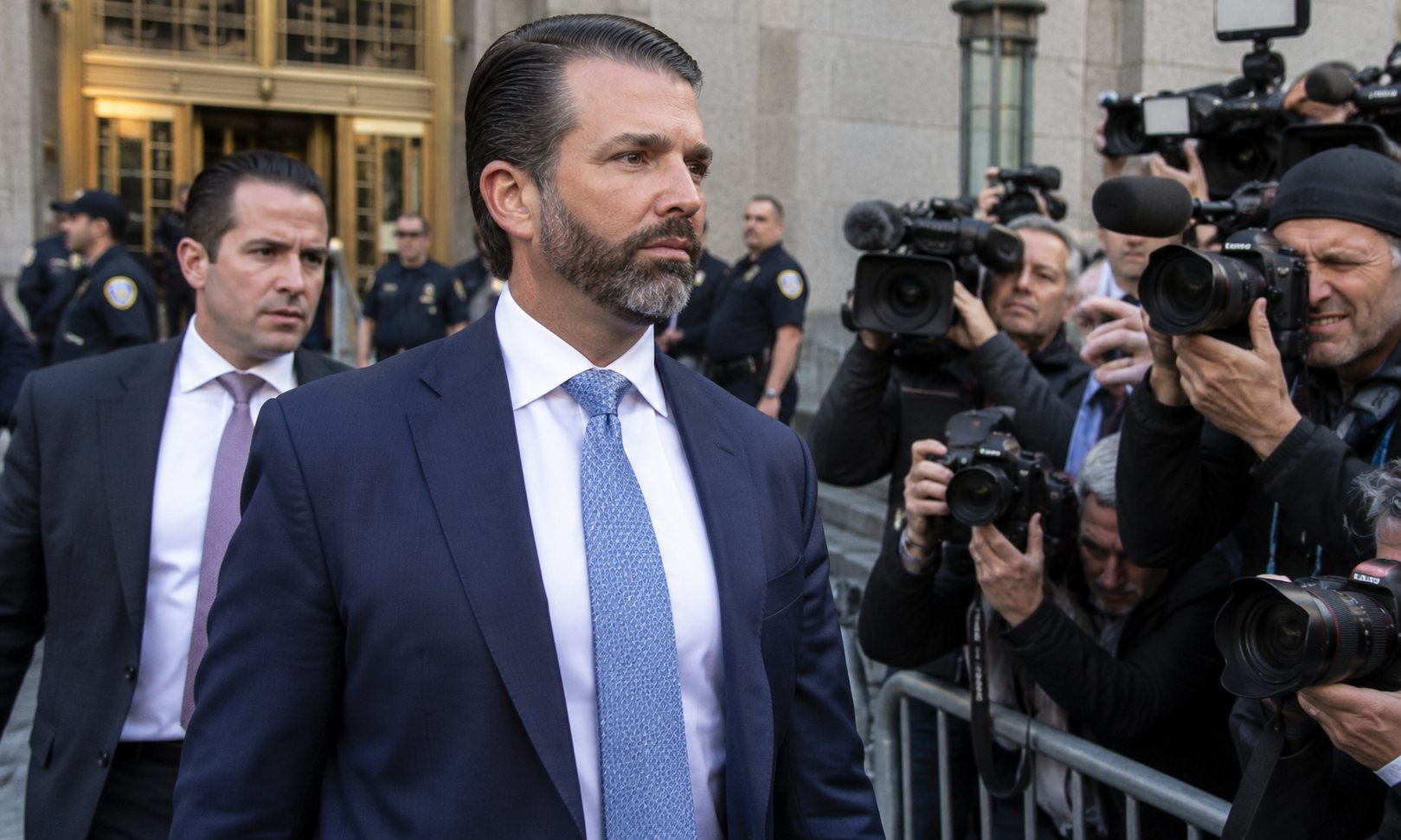
Donald Trump Jr. took the witness stand Wednesday in his family's $250 million civil fraud trial, distancing himself from the financial statements at the center of allegations that the Trump Organization systematically inflated property values to obtain favorable loans and insurance terms.
Trump Jr., an executive vice president of the Trump Organization, became the first member of the family to testify in the case brought by New York Attorney General Letitia James.
Despite his senior leadership position, Trump Jr. insisted he was not directly involved in preparing the company's financial statements, placing responsibility on outside accountants at Mazars USA.
He testified that he relied on accounting professionals to ensure the documents were accurate and acknowledged having little understanding of generally accepted accounting principles.
The lawsuit alleges that Donald Trump, his adult sons, and company executives inflated the former president's net worth by billions of dollars over several years, misleading banks and insurance companies to secure more favorable financial arrangements.
In September, Judge Arthur Engoron ruled that Trump and other defendants had committed persistent fraud by exaggerating asset valuations. The ongoing trial will determine additional allegations and potential penalties.
James is seeking at least $250 million in financial penalties, along with restrictions on the Trump family's ability to conduct business in New York.
Trump Jr.'s testimony raises questions about accountability within the family-run business, particularly how a senior executive could claim limited knowledge of financial documents used in major corporate transactions.
The Trump family denies wrongdoing, arguing that property valuations are subjective and that financial institutions conducted their own evaluations before approving loans.
Eric Trump is expected to testify Thursday, while former President Donald Trump is scheduled to take the stand next week.
The proceedings represent a significant legal challenge for the former president, whose business empire and claims of extraordinary wealth have been central to his public identity for decades.
As the trial continues, the court will examine not only the accuracy of the Trump Organization's financial statements but also the responsibility of the executives who oversaw the company's operations.