A group of physicians and mental-health specialists is sounding increasingly urgent alarms about President Donald Trump's mental fitness, creating a stark contrast with the White House's insistence that the 80-year-old president remains in “excellent health.”
The disagreement has become more consequential as Trump deals simultaneously with wars involving Iran and Ukraine, commands the world's most powerful military and retains presidential authority over America's nuclear arsenal.
Dr. Henry David Abraham, a psychiatrist and professor emeritus at Tufts University School of Medicine, has been among the physicians raising concerns.
Abraham and other medical professionals have pointed to Trump's public speeches, repeated statements, late-night social-media activity, apparent confusion over names and places and what they describe as increasingly impulsive behavior.
Their conclusion is severe.
Trump's own physician says something very different.
According to the White House, the president's neurological function is strong, his cognitive performance is “excellent,” and he is fully capable of carrying out his duties as president.
Both claims cannot simply be treated as equivalent medical diagnoses.
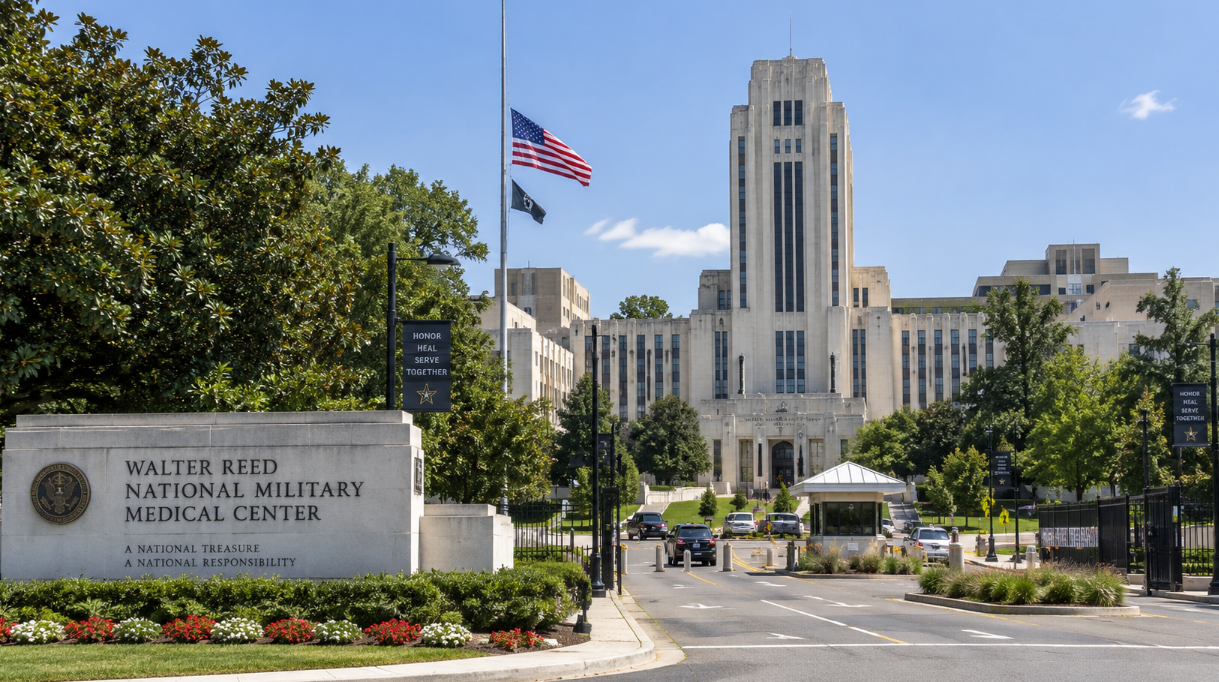
One comes from Trump's physician and examinations performed at Walter Reed National Military Medical Center.
The other comes from doctors evaluating Trump's publicly observable behavior without personally examining him.
But the extraordinary disagreement has placed presidential health back at the center of a national debate.
Doctors Raised Their Concerns Months Ago
The controversy did not begin this week.
Earlier this year, dozens of physicians and mental-health professionals signed a statement expressing concerns about Trump's behavior.
The group included psychiatrists, neurologists and other medical professionals experienced in evaluating cognitive disorders and dangerous behavior.
Their statement was entered into the Congressional Record.
Among the behaviors the doctors said concerned them were what they characterized as disorganized speech, rambling digressions, factual confusion, abrupt changes in policy positions, apparent sleepiness during public proceedings and problems with judgment and impulse control.
They described these as “objectively observable signs of serious medical concern.”
But the doctors also included an important acknowledgment.
They have not personally examined Trump.
Trump is not their patient.
And they said they were not offering a formal medical diagnosis.
Instead, they argued that a president's publicly observable behavior can become a legitimate medical concern when that president possesses extraordinary military authority.
The Nuclear Question
That responsibility is at the center of Abraham's warnings.
The president of the United States occupies a unique position in America's nuclear command structure.
That means questions surrounding a president's judgment carry consequences far beyond ordinary partisan politics.
Abraham has specifically raised concerns about what he describes as impulsivity, rage, grandiosity and Trump's public rhetoric surrounding nuclear weapons and war.
Those concerns have become especially prominent during Trump's confrontation with Iran.
For Abraham and the other physicians who signed the statement, the issue is not simply whether Trump occasionally confuses a name or repeats himself.
They argue that the president's overall pattern of public behavior raises questions serious enough to warrant greater medical scrutiny and transparency.
Trump's Doctor Says He's Fine
The White House's medical assessment could hardly be more different.
Following Trump's May examination at Walter Reed National Military Medical Center, presidential physician Capt. Sean Barbabella reported that Trump remained in “excellent health.”
Barbabella said Trump demonstrated strong cardiac, pulmonary, neurological and overall physical function.
He went further.
According to the president's physician, Trump's cognitive and physical performance were “excellent,” and Trump was “fully fit” to perform all the duties of commander in chief and head of state.
The examination involved consultations with 22 specialists and included extensive diagnostic testing.
Trump also took the Montreal Cognitive Assessment.
He scored 30 out of 30.
That's a perfect score.
What Does a Perfect Cognitive Test Actually Mean?
The Montreal Cognitive Assessment, commonly called the MoCA, is a legitimate and widely used medical screening tool.
It can help doctors identify possible cognitive impairment by testing areas including memory, attention, language, executive function and orientation.
Trump's perfect score therefore represents meaningful evidence against claims that he is currently experiencing cognitive impairment detectable by that screening test.
But there is an important distinction.
The MoCA is a screening test.
It is not, by itself, a comprehensive neurological or psychiatric evaluation capable of answering every possible question about a person's judgment, personality, impulse control or mental health.
Trump's official medical report nevertheless went considerably further than the MoCA result.
His physician reported that a comprehensive neurological examination showed normal mental status, intact cranial nerves, normal motor strength, sensation, reflexes, gait and balance.
That is significant medical evidence and should be part of any serious discussion about Trump's health.
Doctors Are Fighting Over Whether They Should Even Be Talking About This
There is another controversy surrounding the debate.
Psychiatrists traditionally follow what is known as the Goldwater Rule.
The American Psychiatric Association adopted the principle after psychiatrists publicly speculated about Republican presidential candidate Barry Goldwater's mental health during the 1964 presidential campaign.
The rule generally says psychiatrists should not offer professional diagnoses of public figures they have not personally examined and from whom they have not received authorization to discuss their health.
Some medical professionals believe that principle should prevent doctors from publicly assessing Trump.
Others argue that presidents present an extraordinary exception.
A president controls the military, makes decisions involving war and peace and possesses enormous authority over America's nuclear arsenal.
Some physicians therefore argue that they have a professional “duty to warn” when they believe publicly observable behavior indicates a potential danger.
That disagreement within medicine remains unresolved.
Presidential Health Is Always Complicated
American history provides plenty of reasons for skepticism about presidential health disclosures.
Presidents and their staffs have sometimes minimized serious medical problems.
Woodrow Wilson suffered a devastating stroke while president.
Franklin Roosevelt's deteriorating health was largely hidden from the public.
John F. Kennedy suffered from significant medical conditions that Americans knew little about while he was president.
More recently, Joe Biden's age and cognitive abilities became a major political issue during his presidency.
Trump himself repeatedly questioned Biden's mental fitness and demanded cognitive testing.
Now Trump is 80 years old.
That makes questions about presidential health unavoidable regardless of which political party occupies the White House.
Two Very Different Pictures
The public is therefore being presented with two dramatically different assessments.
One group of physicians looks at Trump's public behavior and says it sees serious warning signs.
Trump's actual physician examines him and says he is in excellent health.
Trump receives a perfect score on a recognized cognitive screening test.
Outside doctors respond that the test cannot answer all the questions they are raising.
Trump's physician reports normal neurological findings.
Critics argue that additional independent evaluation and greater transparency are warranted.
There is one thing the available evidence does not justify:
Diagnosing Donald Trump from a distance.
The doctors criticizing Trump themselves acknowledge that they have not personally examined him, and their observations cannot establish that Trump has dementia, Alzheimer's disease or another specific neurological or psychiatric disorder.
But their warnings are nevertheless part of a growing public debate about the health of the president of the United States.
And because Trump is now 80 years old, commands the American military and controls the country's nuclear forces, that debate is unlikely to disappear.
The White House says Donald Trump is in “excellent health.”
A group of doctors looking at his public behavior says there are reasons for serious concern.
Those two assessments are now colliding in public.
And when the person being discussed is the president of the United States, the question of presidential health isn't merely personal.
It is a matter of public interest.