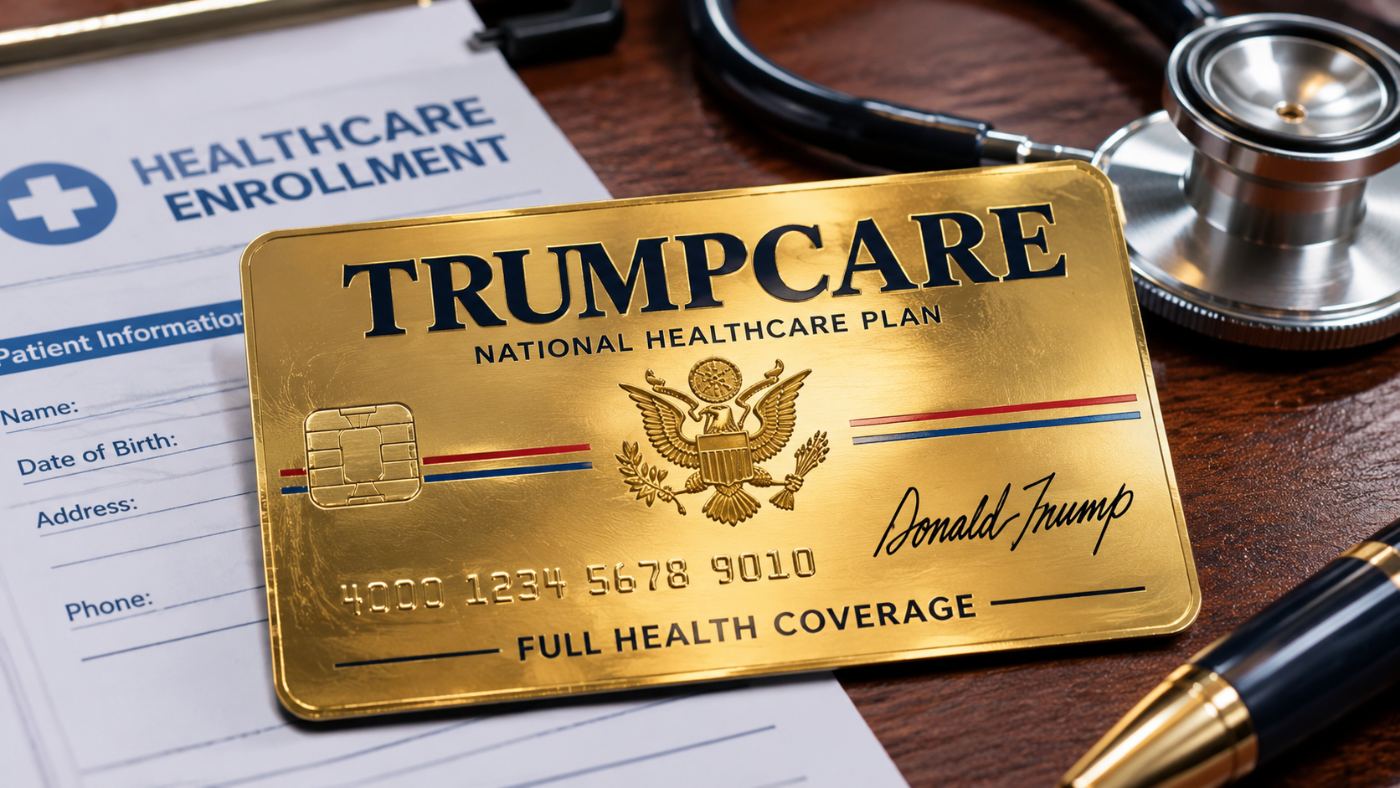
Donald Trump has put his name on hotels, golf courses, buildings, and even a proposed immigration gold card. Now a newly elected Democratic senator is offering him something considerably more ambitious: a national healthcare program bearing his name.
Michigan Senator-elect Abdul El-Sayed has proposed an unusual bargain. If Trump supports universal healthcare through Medicare for All, Democrats could call the program “Trumpcare.”
The proposal raises a serious question beneath its attention-grabbing presentation: Could the president's interest in establishing a lasting political legacy create an opening for healthcare reform?
A Gold Card With Trump's Name
On November 12, El-Sayed shared a mock gold healthcare card prominently featuring Trump's name.
The proposed program would guarantee health coverage to Americans throughout their lives, eliminating insurance premiums, deductibles, and copayments.
During a November 10 CNN interview, El-Sayed suggested that Trump could receive credit for accomplishing something previous presidents had failed to achieve.
The Michigan Democrat emphasized that the program's name mattered less to him than ensuring Americans could receive medical care.
The gold card was a promotional concept, not an official government program or approved insurance benefit.
What Medicare for All Would Mean
Medicare for All generally refers to a federally financed, single-payer healthcare system covering all Americans.
Under proposals championed by Senator Bernie Sanders and other progressives, comprehensive coverage would include hospital care, physician visits, prescription drugs, dental treatment, and vision services.
Patients would generally no longer face premiums, deductibles, or copayments at the point of care.
However, eliminating those charges would not eliminate healthcare costs. Financing would shift toward federal revenues, potentially including additional taxes.
Supporters argue that a single-payer system could reduce administrative expenses, expand access, and limit medical debt.
Opponents question its financing, potential tax increases, government administration, and the consequences for private insurance.
Americans Show Growing Interest
An October 2026 survey by the nonpartisan KFF found that approximately 66% of Americans supported the concept of receiving health insurance through a single government plan.
That compares with 53% in an October 2020 survey.
The results suggest growing interest in government-provided coverage, although support for the general concept does not necessarily translate into agreement on specific financing arrangements or legislative proposals.
The United States continues to rely on a combination of employer-sponsored insurance, private plans, Medicare, Medicaid, and other public programs.
Trump's Complicated Healthcare Record
Trump spent much of his first presidency supporting Republican efforts to repeal and replace the Affordable Care Act.
His administration's healthcare approach has generally emphasized private insurance and market-oriented reforms rather than universal government coverage.
Accepting El-Sayed's proposal would therefore represent a substantial change in policy direction.
It would also require congressional legislation, agreement on financing, and extensive restructuring of the American healthcare system.
A new name alone would accomplish none of those things.
Democrats Test a Different Approach
El-Sayed's proposal comes as Democrats prepare to take control of Congress in January 2027.
Some Democratic lawmakers are considering opportunities for cooperation with Trump, while others favor advancing legislation and challenging him to approve or veto it.
El-Sayed's approach attempts to combine a progressive policy objective with an appeal to the president's interest in public recognition.
As of November 14, there is no confirmed agreement or endorsement from Trump.
The proposal remains an invitation rather than a negotiated healthcare plan.
But it presents an unusual political test: whether two sides with sharply different healthcare philosophies could agree on a major reform, even if the president received the naming rights.