Congressional Democrats are demanding immediate protections for Special Counsel Robert Mueller's Russia investigation after President Donald Trump's removal of Attorney General Jeff Sessions placed a longtime critic of the investigation in charge of overseeing it.
The confrontation intensified Thursday as Democratic lawmakers accused Trump of potentially interfering with an investigation examining Russian election interference and possible connections to his 2016 presidential campaign.
The controversy comes just two days after Democrats won control of the House of Representatives, giving them new investigative powers beginning in January.
Democrats Demand Answers
Representative Jerrold Nadler, the ranking Democrat on the House Judiciary Committee, led lawmakers in sending letters to acting Attorney General Matthew Whitaker and Republican committee chairman Bob Goodlatte.
The letters demanded answers about Sessions' removal, Whitaker's appointment, and the future of Mueller's investigation.
Democrats also requested emergency congressional hearings to examine whether the president's actions threatened the independence of federal law enforcement.
They cited Trump's previous efforts to influence investigations involving his administration, including his dismissal of FBI Director James Comey in May 2017.
Nadler and his colleagues argued that Sessions' forced departure raised concerns about possible presidential interference.
Whitaker Refuses to Step Aside
Whitaker's appointment has become particularly controversial because of his previous public criticism of Mueller.
Before joining the Justice Department, Whitaker questioned the investigation's scope and suggested that an attorney general could restrict its funding rather than dismiss Mueller outright.
According to people familiar with his thinking, Whitaker does not intend to recuse himself from supervising the investigation.
That position has alarmed Democrats and former Justice Department officials who question whether he can exercise independent judgment.
Whitaker has not been accused of actually interfering with Mueller's work since taking office.
Nevertheless, his previous statements have created uncertainty about how the investigation will proceed.
Congressional Democrats Prepare for Oversight
Democratic leaders are moving to preserve evidence that could become important during future congressional investigations.
Lawmakers have requested that senior administration officials retain documents relating to Mueller's work and the circumstances surrounding Sessions' dismissal.
Among the officials receiving preservation requests are FBI Director Christopher Wray and CIA Director Gina Haspel.
Representative Adam Schiff, who is positioned to lead the House Intelligence Committee, has indicated that Democrats intend to examine the administration's handling of the Russia investigation.
Their incoming majority will allow them to conduct hearings, demand records, and issue subpoenas.
Protesters Take to the Streets
Concern over Mueller's future has extended beyond Capitol Hill.
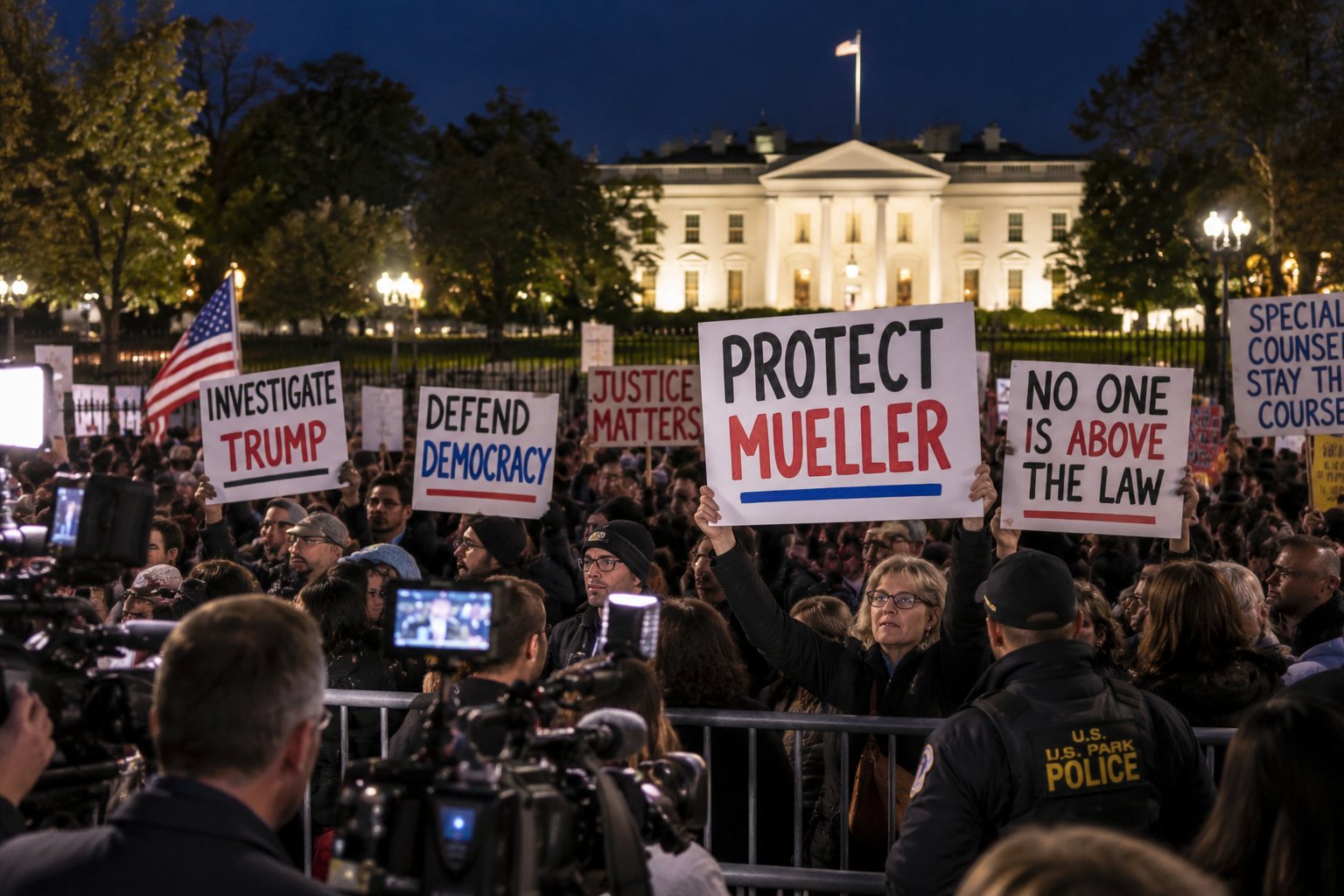
Thousands of demonstrators gathered Thursday in Washington, New York, and other American cities to demand protection for the investigation.
Protesters outside the White House warned that the president's decision to replace Sessions could undermine confidence in the Justice Department.
The demonstrations reflect public concern about whether an investigation involving the president's associates can remain independent when its supervisor is appointed by the president himself.
Republicans Offer Differing Responses
Republican Senate Majority Leader Mitch McConnell has resisted legislation designed to protect Mueller from dismissal.
Other Republicans have expressed support for allowing the investigation to reach its conclusion.
Senator-elect Mitt Romney said Mueller's work should continue without interference, while Senator Lamar Alexander warned against appointing a permanent attorney general who would halt the investigation.
Trump continues to deny wrongdoing and has repeatedly described the Russia investigation as politically motivated.
A Test of Congressional Power
The Justice Department shake-up has created an immediate confrontation between the White House and the incoming Democratic House majority.
Democrats cannot assume their new committee powers until January, but they are already preparing to investigate the president's actions.
The central question remains whether Mueller will be permitted to complete his investigation without political interference.
For congressional Democrats, protecting that independence has become one of their first major priorities following Tuesday's election.