Martin Kao, the former CEO of Hawaii-based defense contractor Navatek, is serving a federal prison sentence for financial crimes, including illegal campaign contributions. But according to an extensive investigation by the nonprofit newsroom ProPublica, Kao told federal investigators something potentially far more significant: He claimed his company had used political contributions to influence powerful members of Congress and secure lucrative government contracts.
Kao was prosecuted. He pleaded guilty. He was sentenced to prison.
But what happened to the investigation into the politicians he implicated?
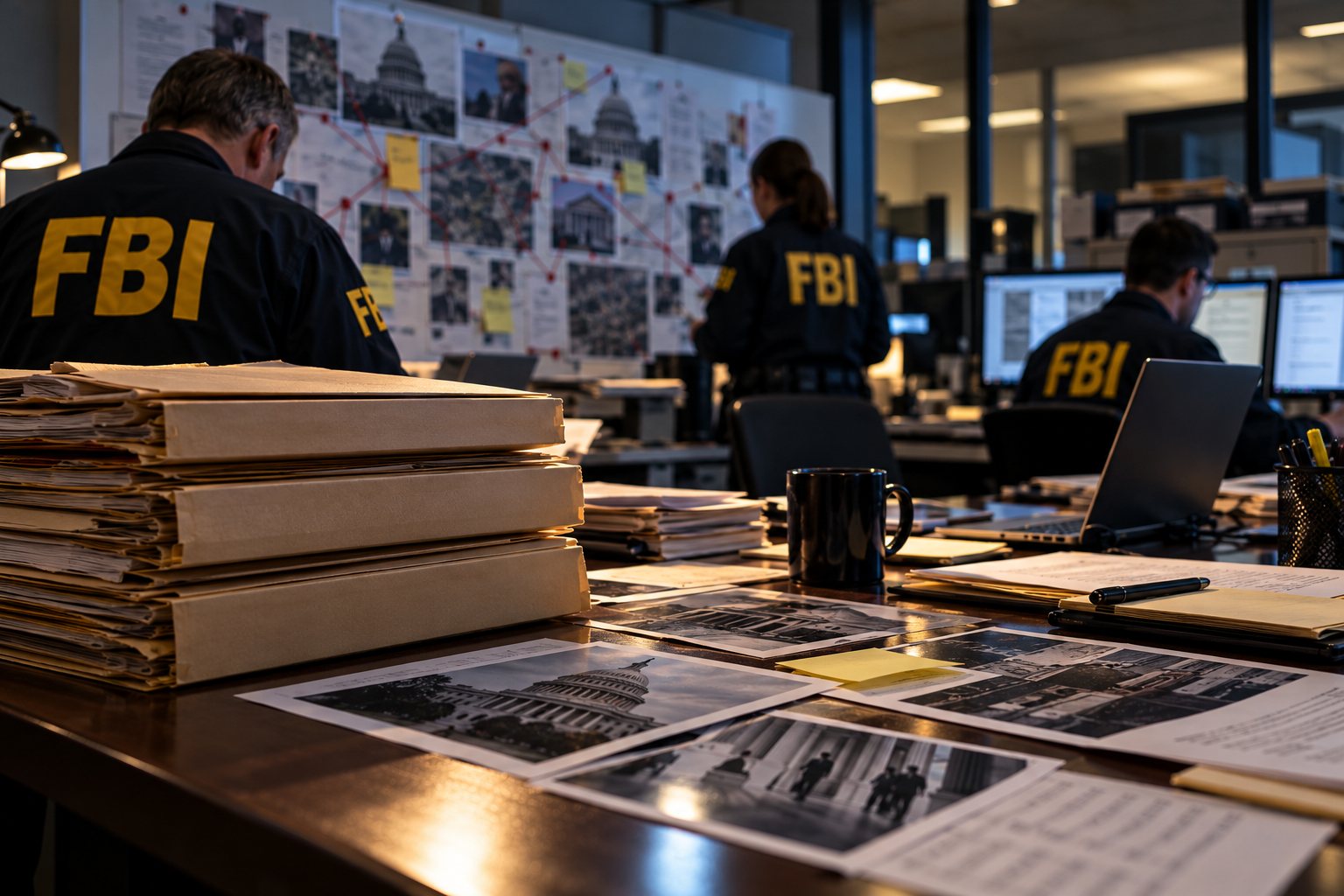
That is the troubling question emerging from ProPublica's reporting, which describes an FBI anti-corruption investigation that was gaining momentum before being derailed following Donald Trump's return to the White House.
The Defense Contractor Who Admitted Breaking the Law
Navatek was a Hawaii-based defense contractor specializing in naval technology and research. The company received millions of dollars in federal contracts, including funding for projects supported by influential lawmakers.
Its former CEO, Martin Kao, eventually became the subject of federal investigations involving campaign finance violations and financial fraud.
Kao pleaded guilty to campaign finance and loan fraud offenses and was sentenced in 2025 to 87 months in federal prison.
But during his cooperation with federal authorities, Kao described what he alleged was a much broader system of political influence.
According to ProPublica, Kao told FBI investigators that campaign contributions were not simply a way to support politicians who shared his company's interests. He claimed they were part of arrangements intended to secure government funding and contracts.
His allegations implicated prominent lawmakers from both major political parties.
Powerful Members of Congress Named
ProPublica's reporting examined allegations involving Republican Senators Susan Collins of Maine and Lindsey Graham of South Carolina, along with Republican Representative Joe Wilson and Democratic Representative James Clyburn, both of South Carolina.
According to Kao's account, political fundraising commitments and campaign contributions were connected to efforts to obtain federal defense funding.
One particularly significant allegation involved Collins, whose support helped Navatek pursue millions of dollars in Navy research funding.
ProPublica reported that a political committee supporting Collins received $150,000 through a company Kao used to conceal the original source of the contribution.
The investigation also examined communications between Navatek executives, political fundraisers and congressional offices.
Importantly, the allegations against the lawmakers have not been proven in court. The lawmakers and their representatives have disputed wrongdoing, and campaign contributions or congressional support for federal projects do not, by themselves, establish bribery.
Nevertheless, the evidence described by ProPublica raises questions that investigators had begun examining.
An FBI Investigation That Never Reached Its Conclusion
According to ProPublica, federal investigators were examining whether Kao's statements and supporting records could establish a broader pattern of corruption involving elected officials.
The FBI's anti-corruption investigators had obtained records, reviewed communications and corroborated portions of Kao's account.
But the investigation faced a major disruption after Trump returned to office in January 2025.
The administration dismantled the FBI unit responsible for pursuing the inquiry, and the broader investigation was shelved.
ProPublica's reporting does not establish that prosecutors had sufficient evidence to charge the lawmakers, nor does it prove that the investigation was terminated specifically to protect them.
But it does establish that investigators were pursuing serious allegations when the investigative effort was interrupted.
And that leaves an important question unanswered: What might investigators have discovered had they been allowed to finish their work?
One Man Goes to Prison. The Political Questions Remain.
There is a fundamental distinction between Kao's criminal convictions and his accusations against members of Congress.
Kao admitted to crimes and was sentenced accordingly. His claims about politicians require independent investigation, corroboration and due process.
Yet his criminal conduct is precisely what makes the broader investigation important.
If a defense contractor illegally funneled political contributions while seeking taxpayer-funded contracts, federal authorities have a legitimate reason to determine whether anyone receiving those contributions knowingly participated in an unlawful arrangement.
Were politicians aware of the true sources of the money?
Were government contracts or appropriations promised in exchange for campaign support?
Did congressional staff members facilitate arrangements that crossed the line from ordinary political advocacy into criminal conduct?
And perhaps most importantly, why did the investigation end before those questions were publicly resolved?
The FBI Owes the Public an Explanation
Senator Collins has maintained that earlier federal scrutiny found no wrongdoing involving her or her campaign. The FBI has also stated that a previous investigation found nothing implicating Collins.
However, ProPublica reported that the later investigation involved additional allegations and evidence developed after that earlier inquiry.
That distinction matters.
Being cleared in an earlier investigation does not necessarily resolve new allegations arising from subsequently obtained evidence. At the same time, the existence of an investigation is not proof that a crime occurred.
The public deserves to know whether the later allegations received a complete and independent examination.
The Justice Department should be able to explain whether the investigation was formally closed, whether its evidence was reassigned to other investigators, and whether any additional investigative steps remain possible.
Those questions are particularly important when the subjects of an inquiry include elected officials who exercise influence over federal spending and government oversight.
Accountability Cannot Stop at the Contractor
ProPublica's investigation presents a disturbing picture of how political fundraising and federal contracting can become intertwined.
Martin Kao was held criminally accountable for his conduct. That much is established.
What remains unresolved is whether any public officials knowingly participated in the arrangements he described.
There may be innocent explanations for some of the transactions and communications examined by investigators. There may also be evidence that warrants further scrutiny.
Only a complete, independent investigation can adequately distinguish between the two.
This should not be a partisan question. Allegations involving Republicans and Democrats deserve the same investigative standards.
A defense contractor has gone to prison. His claims involving powerful members of Congress remain unresolved.
The American public deserves to know why the FBI's investigation ended before those questions were fully answered.