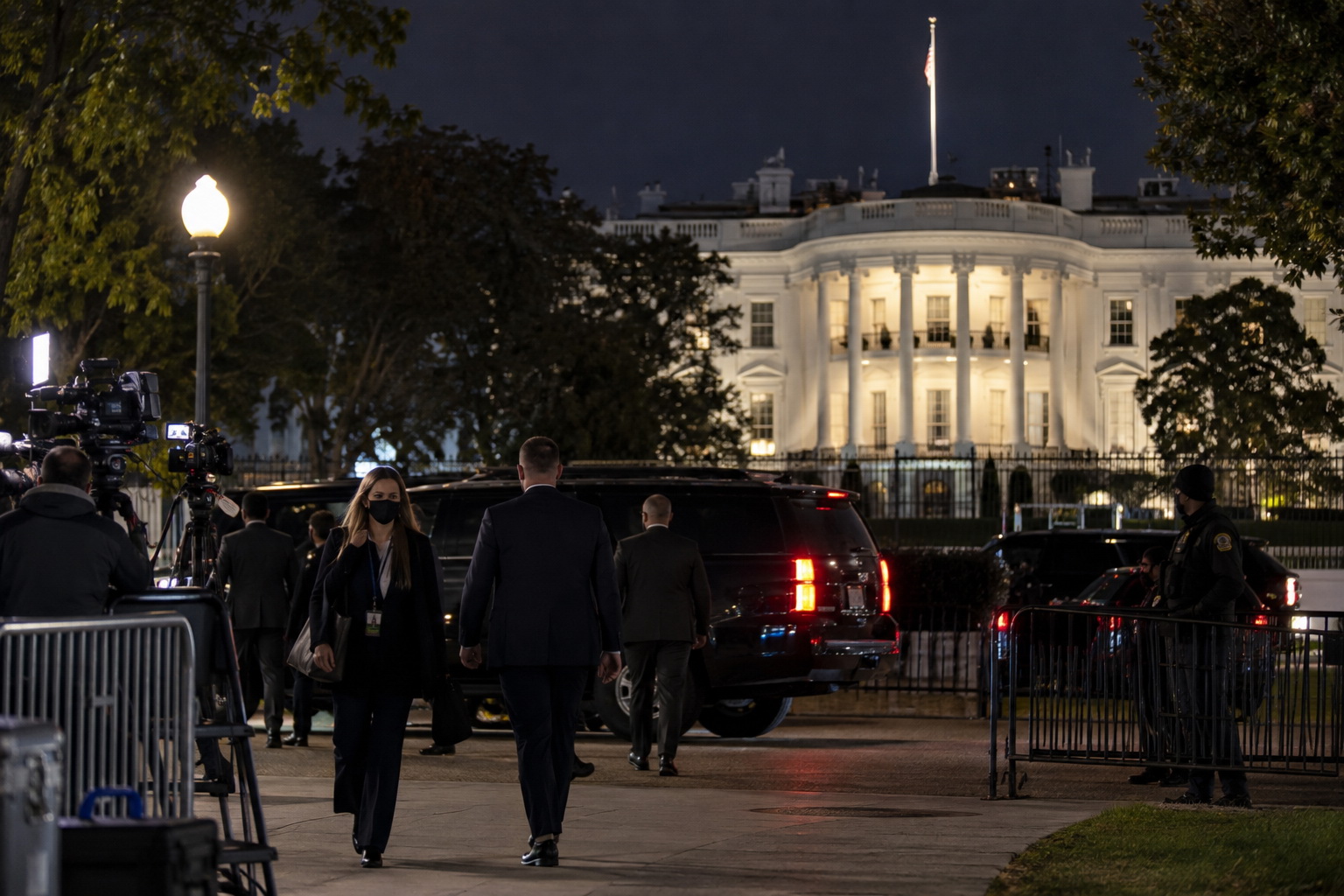
With the presidential election barely a month away, COVID-19 reached the inner circle of the White House on October 1, 2020, when senior Trump adviser Hope Hicks tested positive for the coronavirus.
The diagnosis immediately raised questions about how widely the virus might have spread through the president's staff and campaign.
Hicks had been traveling with President Donald Trump during an extraordinarily busy stretch of campaign activity. She accompanied him to the presidential debate in Cleveland on September 29 and traveled with him to a campaign rally in Minnesota the following day.
By the evening of October 1, Trump and First Lady Melania Trump were quarantining while awaiting their own test results.
Within hours, the crisis would become even more serious.
Hope Hicks Tests Positive
Hicks was one of Trump's closest advisers and regularly traveled with the president.
Her positive test was especially concerning because she had recently spent time around Trump and other senior administration officials.
The news emerged Thursday evening, October 1.
Trump confirmed during a television interview that Hicks had tested positive and said he and the first lady had been tested.
The president's campaign schedule had continued that day. Trump traveled to his golf club in Bedminster, New Jersey, for a fundraiser before returning to the White House.
The situation demonstrated the difficulty of containing the virus within a political operation whose senior officials were frequently traveling, holding events and interacting with one another.
A Campaign Conducted During a Pandemic
The diagnosis came during the final weeks of a presidential campaign conducted under unprecedented circumstances.
COVID-19 had already killed more than 200,000 people in the United States.
Trump nevertheless continued holding campaign events, often criticizing restrictions imposed in response to the pandemic and emphasizing the need to reopen businesses, schools and the economy.
The Trump campaign and White House also faced criticism throughout 2020 over their approach to masks and social distancing.
Trump frequently appeared publicly without a mask and had mocked Democratic nominee Joe Biden for routinely wearing one.
Just two days before Hicks' diagnosis became public, Trump had again commented on Biden's mask use during the first presidential debate.
The Virus Moves Through Trump's Inner Circle
Hicks' diagnosis would soon prove to be only the beginning.
Late on October 1, Trump announced that he and the first lady would quarantine while awaiting their results.
Then, in the early hours of October 2, Trump announced that both had tested positive for COVID-19.
The president's diagnosis immediately transformed the final month of the presidential campaign.
Trump was 74 years old at the time and therefore faced an elevated risk of complications from the disease.
His condition became serious enough that he was transported to Walter Reed National Military Medical Center later on October 2.
Other people connected to the White House and Republican political events around the same period would also test positive.
The cluster intensified scrutiny of precautions inside the White House and at political gatherings.
A Remarkable Turn in the 2020 Campaign
The timing was extraordinary.
Only 32 days remained before Election Day.
Trump had spent much of the year arguing that the country needed to move toward normalcy despite the pandemic. He had resumed large political rallies and repeatedly emphasized reopening the economy.
Now the virus had reached the center of his own administration and campaign.
The events of October 1 began with the president still traveling and campaigning.
They ended with Trump quarantined inside the White House, waiting to learn whether he had contracted the same virus that had already disrupted nearly every aspect of American life.
Within hours, he would learn that he had.