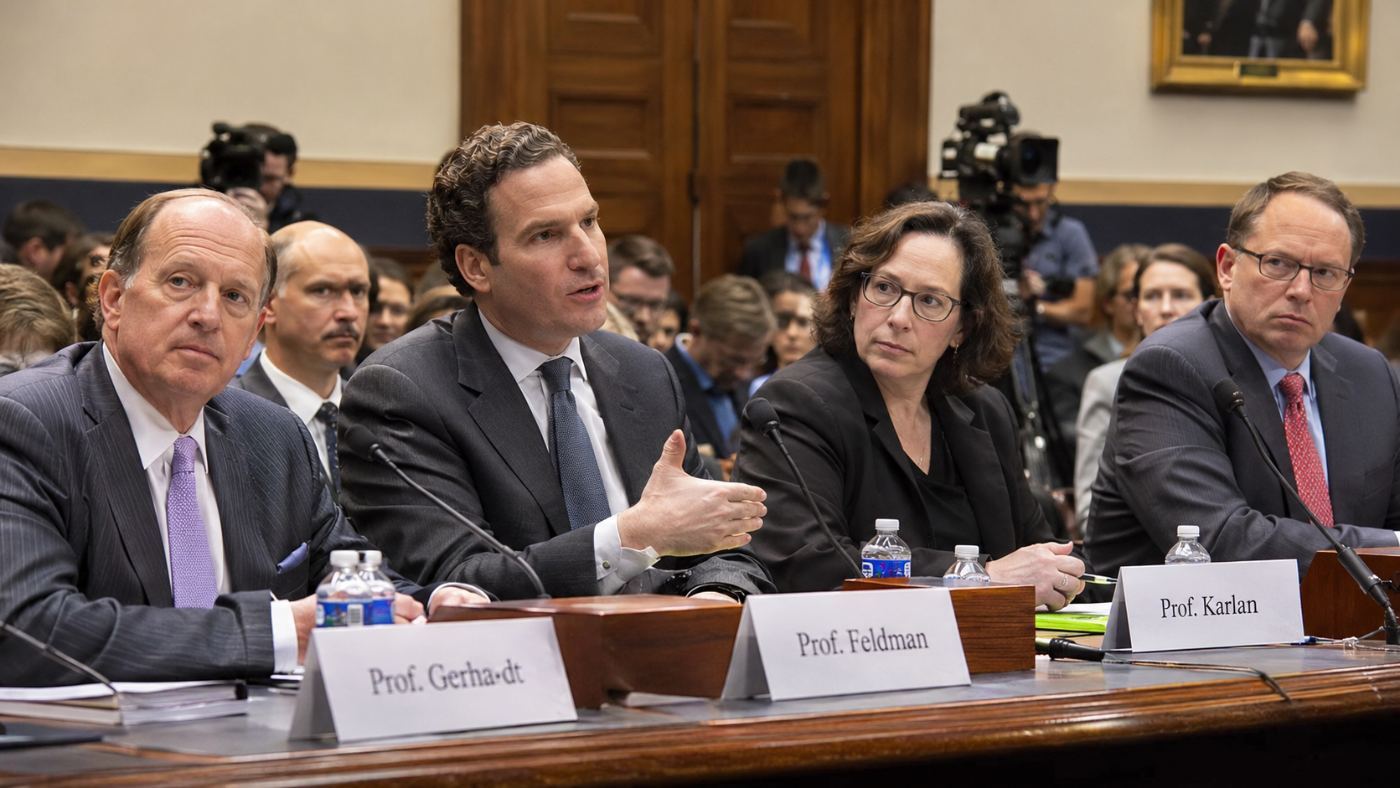
On December 4, 2019, three prominent constitutional law scholars told the House Judiciary Committee that President Donald Trump's conduct toward Ukraine constituted an impeachable abuse of presidential power.
The testimony came one day after House Democrats released a nearly 300-page report accusing Trump of pressuring a foreign government to assist his reelection campaign.
Four legal experts appeared before Congress to explain the Constitution's impeachment provisions and assess the allegations against the president.
Three Scholars Support Impeachment
The Democratic majority invited three professors: Noah Feldman of Harvard Law School, Pamela Karlan of Stanford Law School, and Michael Gerhardt of the University of North Carolina.
All three concluded that Trump's alleged conduct met the constitutional standard for impeachment.
Their testimony focused on Trump's efforts to persuade Ukrainian President Volodymyr Zelensky to announce investigations involving Joe Biden, a potential opponent in the 2020 presidential election.
Investigators had also examined the administration's withholding of approximately $391 million in military assistance to Ukraine.
The scholars argued that using presidential authority to obtain personal political benefits was precisely the kind of misconduct the Constitution's impeachment provisions were designed to address.
The Constitutional Standard
Article II of the Constitution permits impeachment and removal for treason, bribery, and other high crimes and misdemeanors.
The professors explained that impeachment does not necessarily require a violation of a specific criminal statute.
Instead, serious abuses of public office can qualify when they threaten constitutional government.
Feldman argued that soliciting foreign assistance for electoral advantage represented an abuse of presidential authority.
Karlan emphasized that public office must be exercised for the country's benefit rather than a president's personal political interests.
Gerhardt maintained that the evidence supported impeachment for abuse of power.
The Republican Witness Disagrees
Republicans invited Jonathan Turley, a constitutional law professor at George Washington University.
Turley acknowledged that some allegations against Trump were troubling but argued that the impeachment inquiry had not established a sufficiently complete evidentiary record.
He warned against moving too quickly and maintained that Congress should obtain additional testimony and documents before deciding whether to impeach.
His position differed from the three Democratic-invited witnesses, who believed the existing evidence supported impeachment.
The disagreement centered on whether the documented conduct and available evidence justified the constitutional remedy.
Republicans Challenge the Proceedings
Throughout the hearing, Republican lawmakers criticized the impeachment inquiry as partisan and procedurally unfair.
They argued that Democrats had failed to demonstrate an impeachable offense and questioned whether the president's interactions with Ukraine represented legitimate concerns about corruption.
Democrats responded that the investigation had documented efforts to obtain politically advantageous announcements from a foreign government.
The hearing also addressed the administration's refusal to provide certain documents and witnesses requested by congressional investigators.
The House Moves Toward Impeachment
The December 4 hearing marked the House Judiciary Committee's formal examination of the constitutional grounds for impeachment.
On December 10, Democratic leaders announced two proposed articles of impeachment: abuse of power and obstruction of Congress.
Eight days later, the House voted to impeach Trump on both counts.
The Senate subsequently acquitted him in February 2020.
The acquittal meant Trump remained in office, although the House's impeachment votes remained part of the historical record.
A Constitutional Debate With Lasting Significance
The December 4 testimony demonstrated how constitutional scholars could examine the same presidential conduct and reach different conclusions about the sufficiency of evidence and the appropriate congressional response.
Three witnesses concluded that Trump's actions justified impeachment, while the fourth argued that the case had not been adequately established.
Their testimony provided Congress with competing interpretations of presidential accountability and the constitutional limits of executive power.
December 4, 2019, remains an important date in the history of Trump's first impeachment and the debate over presidential abuse of power.