Federal authorities have arrested a Florida man accused of mailing explosive devices to prominent Democrats and critics of President Donald Trump, but the arrest has done little to silence conspiracy theories circulating among some of the president's supporters and conservative media personalities.
For days, right-wing commentators have suggested without evidence that the attempted bombings were a political hoax orchestrated by Democrats to generate sympathy ahead of the November midterm elections.
Now, even as investigators identify a suspect with a documented history of supporting Trump and attacking his political opponents, some of those same voices are continuing to question the official account.
The controversy illustrates how quickly politically convenient misinformation can spread — and how difficult it can be to dislodge once it becomes part of a partisan narrative.
The 'False Flag' Theory
The conspiracy theories began circulating almost immediately after explosive packages were discovered earlier this week.
The devices were addressed to prominent Democratic figures and Trump critics, including former President Barack Obama, former Secretary of State Hillary Clinton, former Attorney General Eric Holder, Rep. Maxine Waters and billionaire philanthropist George Soros. CNN was also targeted.
Rather than wait for investigators to identify those responsible, several conservative commentators suggested the attacks had been staged to damage Republicans politically.
Conservative radio host Rush Limbaugh questioned whether a Republican would carry out such attacks, suggesting that a Democratic operative might have more to gain.
Conservative author Ann Coulter similarly attempted to associate bombings with political liberals, writing on social media that bombs were a liberal tactic.
Pro-Trump commentator Bill Mitchell suggested that the incidents were connected to a political operation involving Soros, offering no evidence to support the allegation.
The underlying argument was that Democrats would benefit politically from being portrayed as victims of violence, particularly with control of Congress at stake in the November 6 elections.
There was no evidence supporting that theory.
The Arrest Contradicts the Narrative
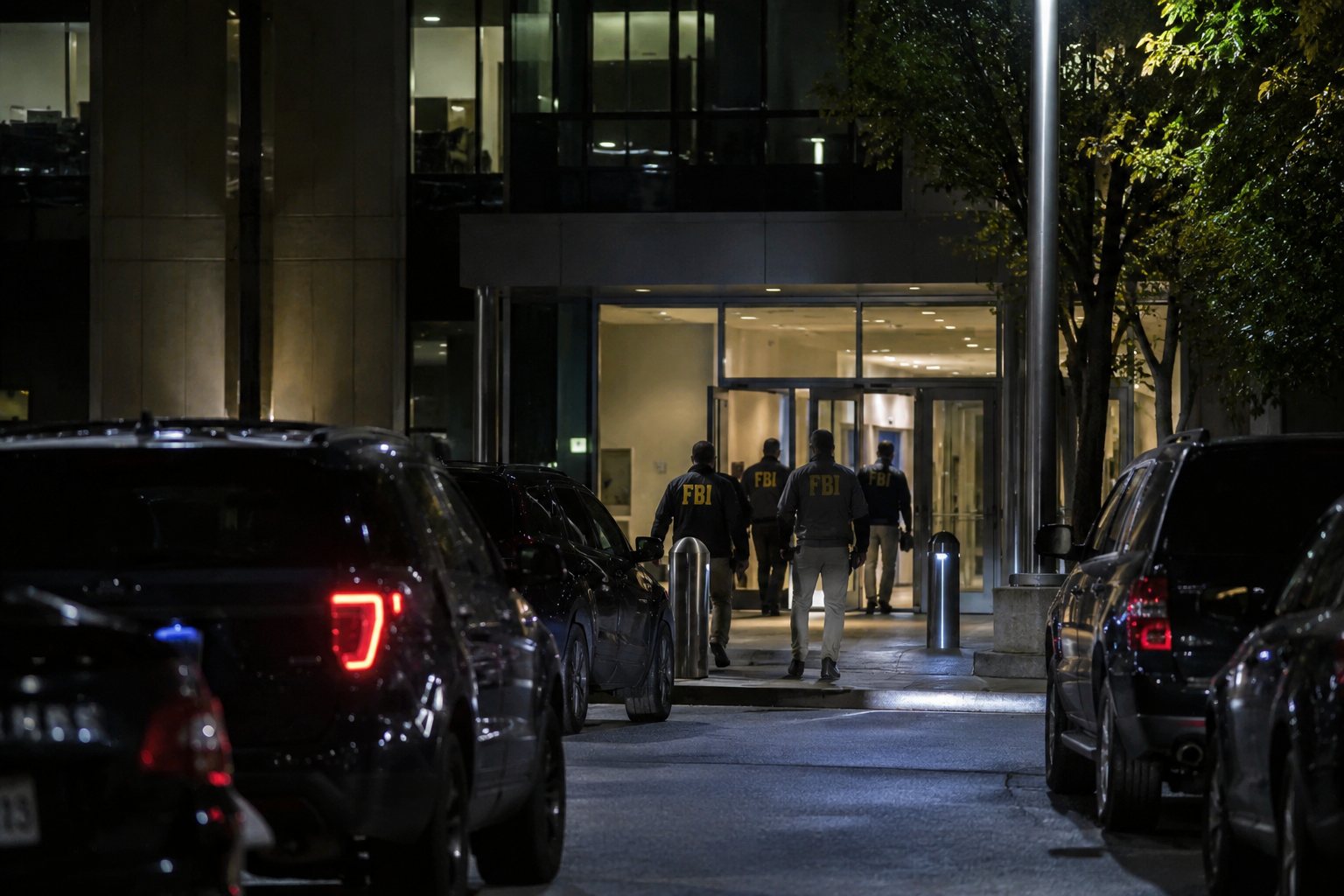
On Friday, federal authorities arrested 56-year-old Cesar Sayoc in Plantation, Florida, charging him in connection with the explosive packages.
Investigators say forensic evidence, including a fingerprint recovered from one of the packages, helped identify the suspect.
Sayoc's white van, covered in pro-Trump imagery and hostile depictions of Democratic politicians, quickly attracted national attention.
Social media accounts believed to belong to Sayoc also contained extensive expressions of support for Trump and aggressive messages directed at prominent Democrats.
Attorney General Jeff Sessions acknowledged during a Friday news conference that the suspect appeared to have partisan political views.
FBI Director Christopher Wray also directly addressed suggestions that the packages were harmless props.
"These are not hoax devices," Wray declared.
Authorities described the packages as improvised explosive devices and emphasized that the investigation remained active.
The arrest and the evidence presented by federal investigators sharply contradicted claims that Democrats had manufactured the attacks.
Some Commentators Refuse to Back Down
Despite Friday's developments, some commentators continued questioning the investigation.
Mitchell raised doubts about details surrounding Sayoc's arrest, suggesting that elements of the case did not add up.
Limbaugh continued expressing suspicion about the timing of the bombings, which occurred less than two weeks before the midterm elections.
Meanwhile, photographs of Sayoc's politically decorated van became fodder for additional speculation on fringe internet forums, where users attempted to reinterpret evidence of his Trump support as proof of a conspiracy.
Not every conservative commentator maintained the original allegations.
Fox News personality Geraldo Rivera, who had previously suggested the bombings might be an elaborate hoax, acknowledged Friday that his earlier speculation had been mistaken.
But the continued circulation of unsupported allegations demonstrates a broader problem: evidence that contradicts a conspiracy theory does not necessarily convince those invested in believing it.
Trump Questions the Timing
President Trump has condemned the attempted bombings and praised law enforcement for apprehending the suspect.
But on Friday morning, before the arrest was announced, the president also suggested that the incidents were interfering with Republican electoral momentum.
"Republicans are doing so well in early voting, and at the polls, and now this 'Bomb' stuff happens and the momentum greatly slows," Trump wrote on Twitter.
The president did not explicitly claim the attacks were staged.
Nevertheless, his remarks placed the attempted bombings within the context of their political consequences rather than focusing exclusively on the danger faced by their intended recipients.
The statement came as investigators were working to identify the individual responsible for sending potentially lethal devices through the mail.
When Political Allegiance Overrides Evidence
The mail bomb investigation has exposed an unsettling feature of the country's increasingly polarized information environment.
Before investigators identified a suspect, commentators advanced theories blaming Democrats. Once authorities arrested an apparent Trump supporter, some of those theories continued circulating rather than being withdrawn.
The episode raises questions about the responsibility of influential media personalities who publicly speculate about serious criminal investigations without supporting evidence.
Political violence is not made less serious by the identity of its victims or the political affiliation of its perpetrator.
Yet the response to this investigation demonstrates how easily a criminal case can become another partisan argument, with facts accepted or rejected according to whether they support a preferred political explanation.
Federal investigators have identified a suspect, recovered forensic evidence and confirmed that the explosive devices were real.
For those continuing to insist that the entire incident was a Democratic conspiracy, the burden remains the same: produce credible evidence.
As of October 26, none has emerged.