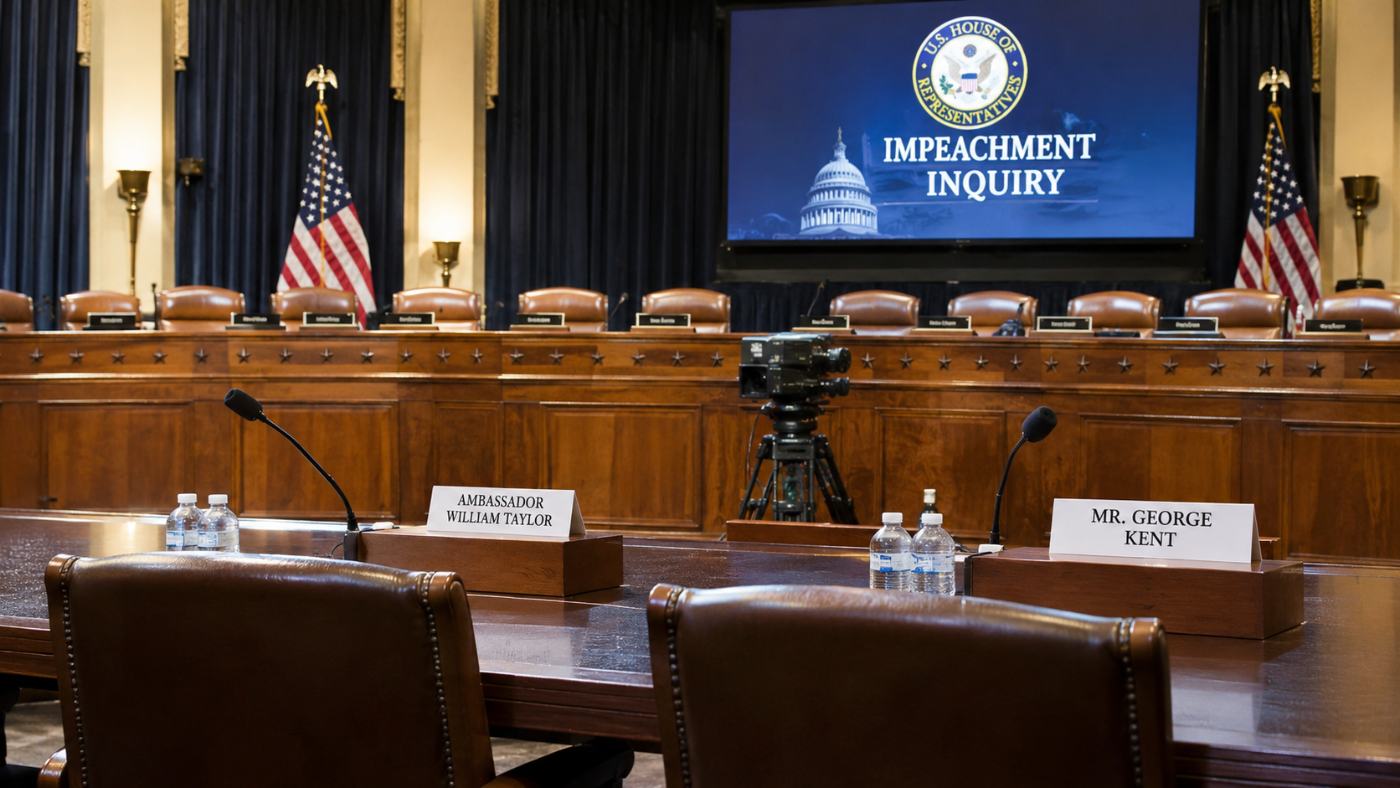
The impeachment investigation into President Donald Trump was about to enter a new and highly public phase.
On November 12, 2019, the House Intelligence Committee finalized arrangements for televised hearings examining allegations that Trump had pressured Ukraine's government to investigate his political opponents while withholding nearly $400 million in congressionally approved military assistance.
The following morning, Americans would hear directly from two experienced diplomats whose testimony had raised serious questions about the president's conduct.
From Closed Doors to Public Testimony
House Intelligence Committee Chairman Adam Schiff confirmed that Ambassador William Taylor and State Department official George Kent would appear before the committee on November 13 at 10 a.m.
Taylor was the top American diplomat in Ukraine, while Kent served as deputy assistant secretary of state responsible for European and Eurasian affairs.
Both had previously testified behind closed doors about the administration's dealings with Ukrainian President Volodymyr Zelensky.
Their public appearances represented a significant escalation in the investigation.
For weeks, congressional investigators had gathered testimony concerning Trump's July 25 telephone conversation with Zelensky, the suspension of military assistance, and efforts to obtain investigations involving former Vice President Joe Biden.
Now those allegations would be examined before television cameras.
The Military Aid Controversy
At the center of the investigation was the administration's decision to withhold security assistance intended to help Ukraine defend itself against Russian aggression.
Congress had approved the funding, but the White House temporarily suspended its release during the summer of 2019.
Investigators examined whether Trump had used that assistance, along with the prospect of a White House meeting, to pressure Zelensky into publicly announcing investigations that could benefit Trump's reelection campaign.
Taylor had previously described learning that American officials linked the release of military aid to Ukraine's willingness to announce investigations involving Biden and claims about interference in the 2016 election.
Kent had expressed concern about the involvement of Trump's personal attorney Rudy Giuliani in Ukraine policy and efforts to undermine established diplomatic channels.
Trump denied wrongdoing and maintained that his conversation with Zelensky had been appropriate.
Republicans Prepare Their Defense
As Democrats prepared to present their evidence publicly, Republican lawmakers developed their own strategy.
On November 12, Republican committee staff circulated a memorandum disputing the Democratic interpretation of the evidence.
The document argued that Trump had legitimate reasons to raise corruption concerns with Ukraine and that investigators had failed to establish an improper exchange.
Republicans also emphasized that Ukraine ultimately received the military assistance and that Zelensky had not publicly announced the requested investigations.
Democrats countered that the eventual release of aid did not resolve whether the president had improperly attempted to obtain political assistance from a foreign government.
The competing arguments set the stage for a contentious series of hearings.
A Constitutional Question
The impeachment inquiry extended beyond the details of a presidential telephone call.
Congress was examining whether Trump had abused the powers of his office by using American foreign policy to pursue personal political interests.
The allegations also raised questions about the administration's willingness to cooperate with congressional oversight.
The White House had refused to provide certain documents and directed several officials not to participate in the investigation.
On November 12, Schiff outlined procedures for the upcoming hearings, including opportunities for both Democratic and Republican members to question witnesses.
Additional testimony was scheduled for later in November.
The Nation Prepares to Watch
The November 13 hearing would mark the first public testimony in the House's impeachment inquiry.
Taylor and Kent were expected to describe their understanding of the administration's Ukraine policy and the circumstances surrounding the suspended military assistance.
Their testimony would become part of the evidence considered as Congress determined whether Trump's actions warranted impeachment.
For the president, the hearings meant that allegations previously examined largely behind closed doors would now be presented directly to the American public.
For Congress, the moment represented a consequential test of its constitutional authority to investigate presidential conduct.