One week after President Donald Trump fired FBI Director James Comey, another explosive development emerged from their private conversations.
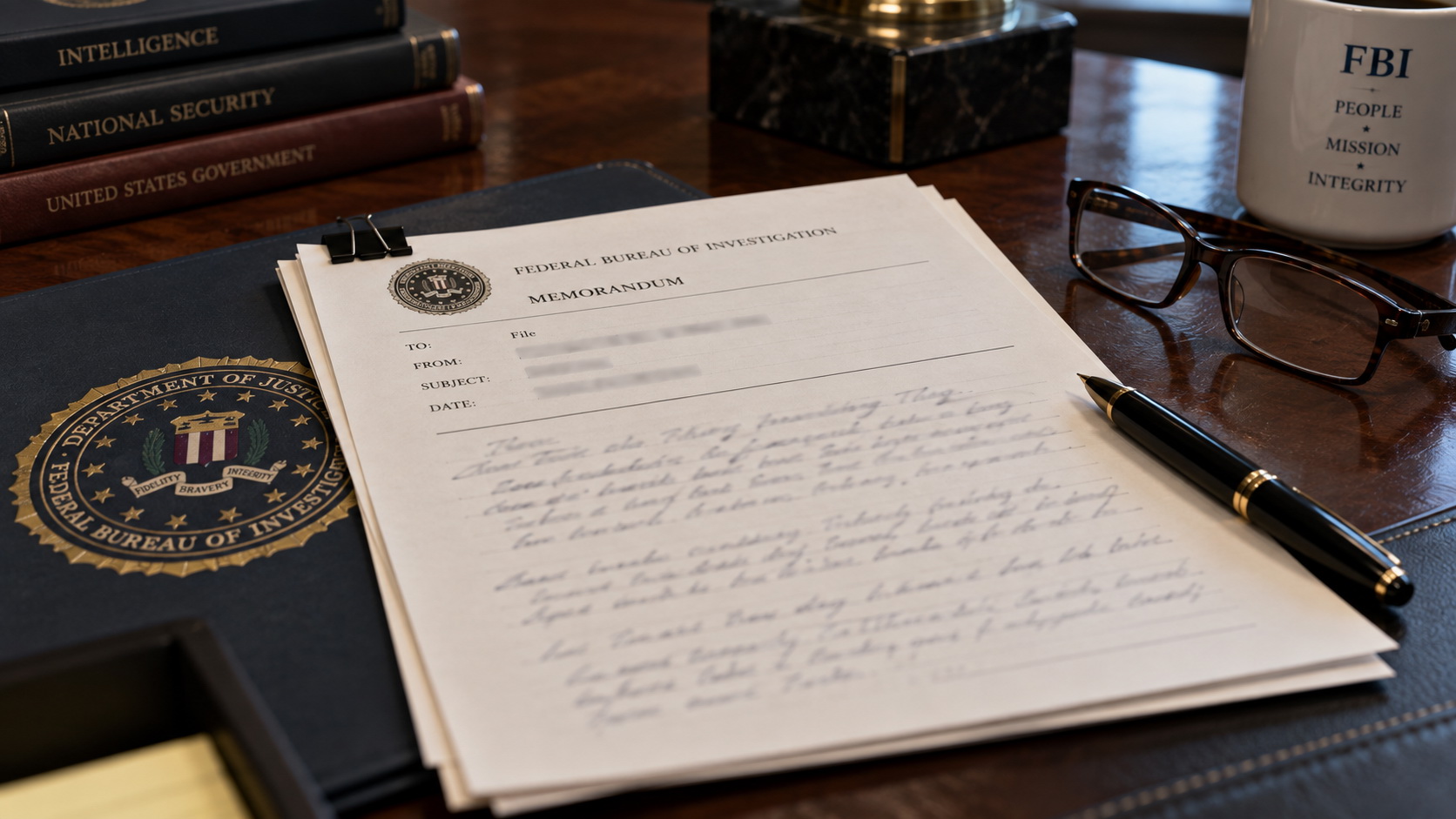
Comey had written a memorandum documenting a February 14 meeting with Trump in the Oval Office.
According to Comey's account, the president brought up former National Security Adviser Michael Flynn, who had resigned just one day earlier, and told the FBI director:
“I hope you can see your way clear to letting this go, to letting Flynn go.”
Comey documented the conversation shortly after it occurred.
When the existence of the memo became public on May 16, it immediately intensified questions about Trump's interactions with the FBI and whether the president had attempted to influence an active investigation.
Trump and Comey Alone in the Oval Office
The conversation took place following an Oval Office meeting involving Trump, Comey and several other senior officials.
According to Comey's account, Trump asked the others to leave.
Eventually, Trump and the FBI director were alone.
The president then turned the conversation toward Flynn.
Flynn had resigned as national security adviser on February 13 after it became clear that he had misled Vice President Mike Pence and other administration officials about his conversations with Russian Ambassador Sergey Kislyak.
The FBI was examining Flynn's contacts with Kislyak.
According to Comey's memo, Trump described Flynn as a good man who had been through a great deal.
Then came the statement that would become the center of the controversy:
“I hope you can let this go.”
What Did Trump Mean?
Comey later testified under oath that he interpreted Trump's words as a direction concerning the FBI investigation of Flynn.
He did not agree to end the investigation.
Trump disputed Comey's account.
The White House said the president had never asked Comey or anyone else to terminate an investigation involving Flynn and described the reported characterization of the conversation as inaccurate.
That created a fundamental dispute over what had occurred inside the Oval Office.
But Comey had something important supporting his version of events:
He had written it down shortly after the meeting.
Comey routinely created contemporaneous memoranda following interactions with Trump that he considered significant.
Those records would eventually become important evidence for investigators attempting to reconstruct what happened during Trump's first months in office.
The Mueller Investigation Later Examines the Meeting
The controversy didn't end in 2017.
Special Counsel Robert Mueller's investigators later examined the February 14 conversation as part of their investigation into possible obstruction of justice.
Mueller's final report said substantial evidence corroborated Comey's account of the meeting.
Investigators cited testimony and other evidence supporting Comey's description of Trump arranging to speak with him privately.
The report also recorded Trump's denials.
Trump maintained that he had not ordered Comey to stop investigating Flynn.
That distinction became central to the debate over the president's intent.
Comey viewed Trump's statement as a direction.
Trump maintained that he had made no such demand.
A Growing Pattern of Questions
By the time the Comey memo became public, Washington was already dealing with an extraordinary sequence of events.
May 9: Trump fired Comey.
May 10: Trump met Russian Foreign Minister Sergey Lavrov and Ambassador Sergey Kislyak in the Oval Office.
May 12: Trump publicly suggested there might be recordings of his conversations with Comey.
May 15: Reports emerged that Trump had shared highly sensitive intelligence during his meeting with the Russian officials.
May 16: The existence of Comey's memo describing the Flynn conversation became public.
Each revelation raised additional questions about Trump's interactions with law-enforcement officials and the ongoing Russia investigation.
And the next major development was only hours away.
Mueller Arrives
On May 17, Deputy Attorney General Rod Rosenstein appointed former FBI Director Robert Mueller as special counsel.
Mueller was authorized to oversee the investigation into Russian interference in the 2016 election and related matters.
The Justice Department emphasized that Mueller's appointment did not mean it had determined that a crime had occurred.
Instead, Rosenstein said the unusual circumstances made an independent special counsel necessary to maintain public confidence in the investigation.
Mueller's investigation would eventually examine Trump's interactions with Comey, including the Flynn conversation.
The special counsel ultimately did not make a determination one way or the other about whether Trump committed obstruction of justice.
Mueller later explained that Justice Department policy prohibiting the criminal prosecution of a sitting president affected the office's approach to that question.
A Conversation That Wouldn't Go Away
The February conversation lasted only minutes.
But Comey's decision to document it ensured that it would become part of the historical record.
Trump denied asking the FBI director to terminate the Flynn investigation.
Comey said he understood the president's words as a direction to drop it.
Later investigators gathered additional evidence and concluded that substantial evidence corroborated Comey's account of what had been said.
That made the Comey memo much more than another Washington leak.
It became a central piece of evidence in the investigation of the president's conduct — and another turning point in an extraordinary eight-day period that began with the firing of the FBI director and ended with the appointment of a special counsel.
Category: Politics / Courts & Justice
Tags: Donald Trump, James Comey, Michael Flynn, FBI, Russia Investigation, Robert Mueller, Oval Office, Obstruction Investigation, White House, 2017