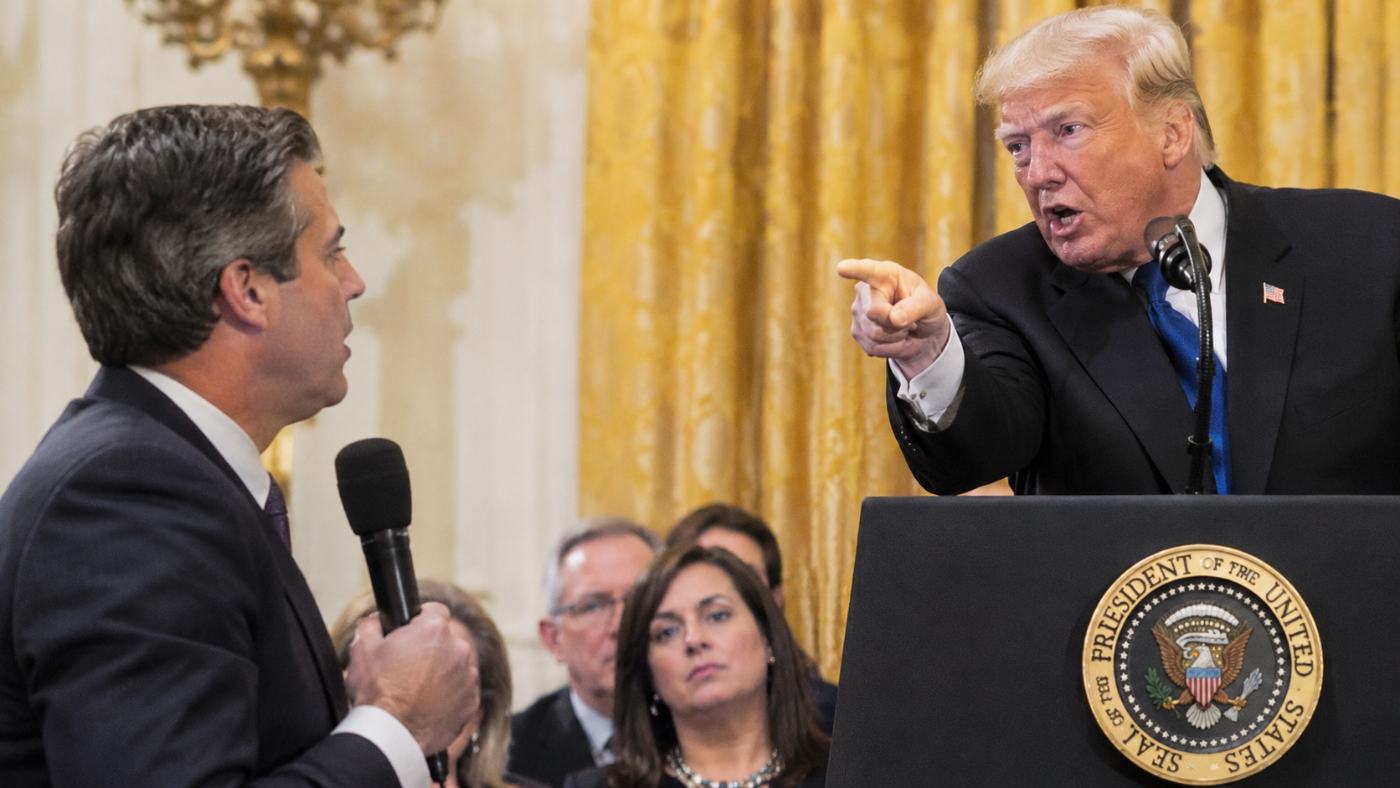
President Donald Trump's escalating confrontation with the American news media reached federal court on November 13, 2018, when CNN filed a lawsuit against the president and senior administration officials over the revocation of White House correspondent Jim Acosta's press credentials.
The lawsuit accused the administration of violating constitutional protections for freedom of the press and due process.
At the center of the dispute was a fundamental question: Could a president exclude a journalist from the White House because he disliked the reporter's questions?
A Confrontation in the White House
The controversy began on November 7, during a contentious presidential news conference following the midterm elections.
Acosta questioned Trump about his characterization of a caravan of Central American migrants approaching the United States.
Trump became visibly irritated as Acosta continued questioning him.
The president called Acosta a rude and terrible person and criticized CNN's reporting.
When a White House intern attempted to retrieve the microphone, Acosta resisted surrendering it while continuing to speak.
Hours later, the administration suspended his White House security credential, known as a hard pass, preventing his regular access to the building.
The White House's Controversial Explanation
White House Press Secretary Sarah Huckabee Sanders initially defended the suspension by accusing Acosta of inappropriate physical contact with the intern.
She subsequently circulated a video of the encounter that critics said had been misleadingly altered.
Unedited footage showed the intern reaching for the microphone while Acosta attempted to retain it. The two made brief contact.
The administration later emphasized Acosta's conduct during the news conference, accusing him of monopolizing questioning and refusing to follow instructions.
CNN disputed the justification, arguing that the punishment reflected Trump's longstanding hostility toward the network and its reporting.
CNN Takes Trump to Court
On November 13, CNN and Acosta filed suit in U.S. District Court in Washington, D.C.
The complaint named Trump, Sanders, White House Chief of Staff John Kelly, and other administration officials.
CNN alleged that the suspension violated the First Amendment by penalizing a journalist for his reporting and questioning.
The network also argued that Acosta's Fifth Amendment due-process rights had been violated because his credentials were revoked without adequate notice or an opportunity to contest the decision.
CNN requested an immediate court order restoring his access.
The White House rejected the allegations.
Sanders dismissed the lawsuit as grandstanding and promised that the administration would defend its decision.
Journalists Warn of a Dangerous Precedent
The dispute extended beyond CNN.
The White House Correspondents' Association supported the lawsuit, describing the punishment as disproportionate.
Press freedom advocates warned that allowing a president to revoke credentials over unwelcome questioning could discourage aggressive reporting across the White House press corps.
The legal controversy also highlighted Trump's repeated attacks on journalists, including his characterization of certain news organizations as enemies of the people.
The administration maintained that reporters were expected to behave professionally and that Acosta's conduct justified disciplinary action.
The central legal issue was whether the government had imposed a legitimate access restriction or punished a reporter for constitutionally protected activity.
A Federal Judge Intervenes
Three days later, on November 16, U.S. District Judge Timothy Kelly, a Trump appointee, ordered the White House to temporarily restore Acosta's credentials.
The ruling focused on due-process concerns rather than definitively resolving CNN's First Amendment arguments.
The administration subsequently restored Acosta's regular access, and CNN dropped the lawsuit after the White House established new rules governing press conferences.
The confrontation nevertheless became a significant test of the relationship between presidential authority and press freedom.
On November 13, 2018, Trump's administration faced a federal lawsuit over its treatment of a journalist who had challenged the president in public.
The case underscored a constitutional principle: Government officials cannot disregard legal protections simply because their relationship with the press has become adversarial.