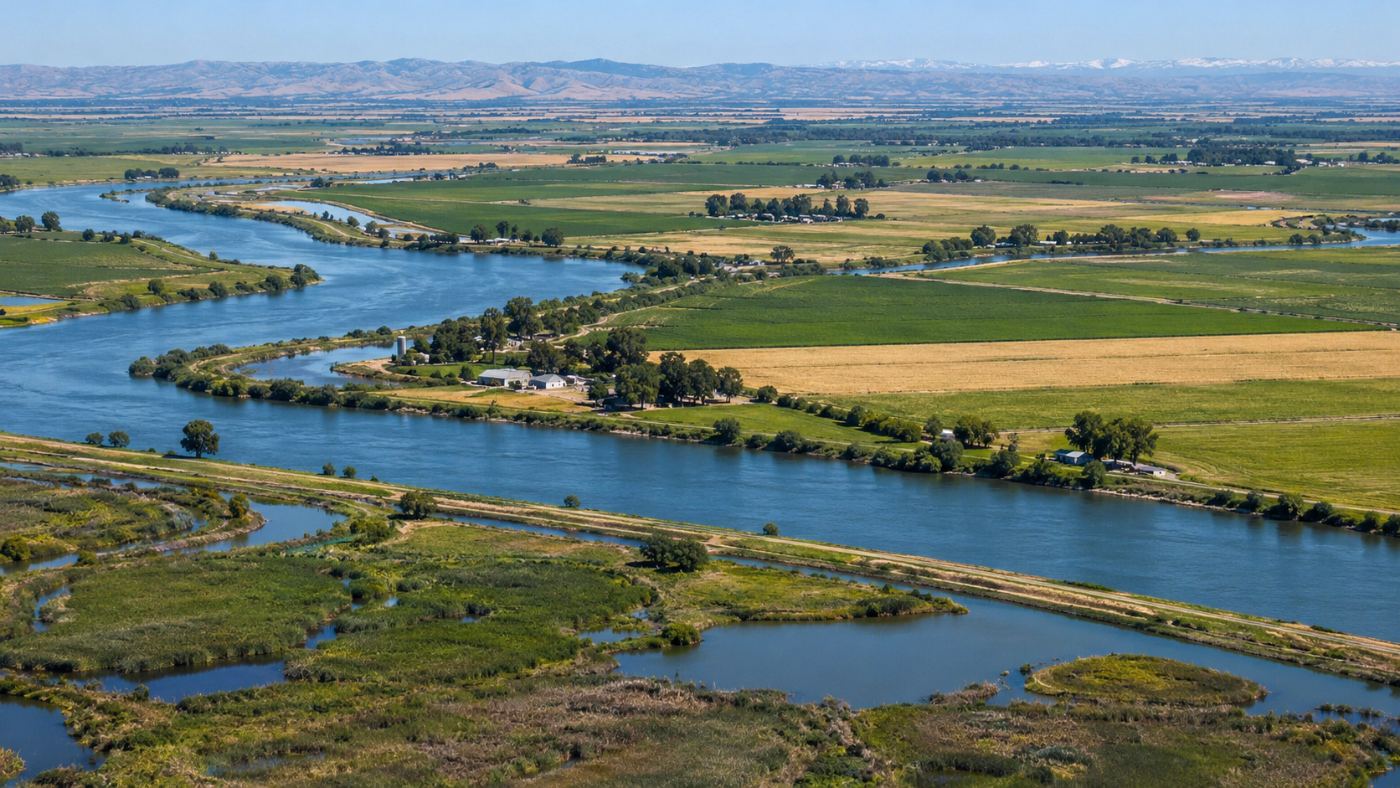
California is confronting a difficult question about the future of the Sacramento–San Joaquin Delta: How much productive farmland should be converted into wildlife habitat and flood-control projects?
A draft report from the Delta Protection Commission recommends preserving more agricultural land than previously contemplated under state restoration plans, reflecting growing concerns about the region's agricultural economy and the communities that depend on it.
The report also raises an important financial question: Who will pay for the proposed changes?
More Than 120,000 Acres Lost Since 1991
According to the commission's draft report, approximately 416,709 acres of the Delta remain in agricultural production, representing 56% of the region's 737,662 acres.
In 1991, approximately 538,000 acres were used for agriculture.
That represents a decline of more than 121,000 acres over 35 years, although the figures do not establish that environmental restoration caused all of that reduction.
Previous Delta planning efforts have involved converting approximately 17,000 acres of farmland into habitat and flood-control projects.
Additional proposals include 32,000 acres of tidal wetland restoration and another 30,000 acres for projects intended to reduce land subsidence and capture carbon.
The new report recommends reconsidering the balance between agricultural preservation and environmental restoration.
The Cost Remains Unclear
One of the most significant unanswered questions involves taxpayer funding.
The draft report identifies potential strategies for protecting agriculture, supporting local economies, and compensating communities for lost tax revenues.
However, it does not establish the total cost of those proposals or identify precisely which public agencies would be responsible for paying.
Amanda Bohl, executive director of the Delta Protection Commission, acknowledged that the costs remain undetermined.
The uncertainty matters because the Delta's agricultural economy supports jobs, local government revenues, and infrastructure essential to flood protection.
Democrats and Republicans Express Concerns
Protecting Delta farmland has attracted attention from lawmakers in both political parties.
Democratic state Senator Jerry McNerney of Stockton has emphasized the importance of agricultural land to the region's economy, environment, and flood-control system.
Democratic Assemblymember Rhodesia Ransom of Tracy has similarly warned that farmers cannot be expected to maintain production while losing agricultural acreage and facing rising costs.
Republican Assemblymember Juan Alanis of Modesto has called for meaningful participation by farmers, landowners, and local communities as the commission finalizes its recommendations.
Their concerns highlight an issue that does not divide neatly along partisan lines.
California Faces Competing Priorities
The Delta is central to California's water system, agricultural production, and environmental health.
State officials have long pursued two objectives: improving water supply reliability and restoring ecosystems damaged by decades of development and water management.
Those goals can conflict with agricultural preservation, particularly when restoration projects require converting productive farmland.
At the same time, environmental restoration can provide benefits, including improved wildlife habitat, carbon storage, and flood resilience.
The challenge is determining which projects deliver the greatest public benefit while limiting economic damage to agricultural communities.
The Next Decision
The Delta Protection Commission's report remains a draft, and its recommendations are not yet a finalized statewide policy.
Before California commits to additional land conversions or new preservation programs, lawmakers will need clearer estimates of costs, funding responsibilities, and consequences for local communities.
The debate illustrates a broader challenge in California policymaking: protecting natural resources while preserving the agricultural economy that supports much of the state.
For the farmers and residents of the Delta, those decisions will have consequences extending far beyond the boundaries of individual restoration projects.