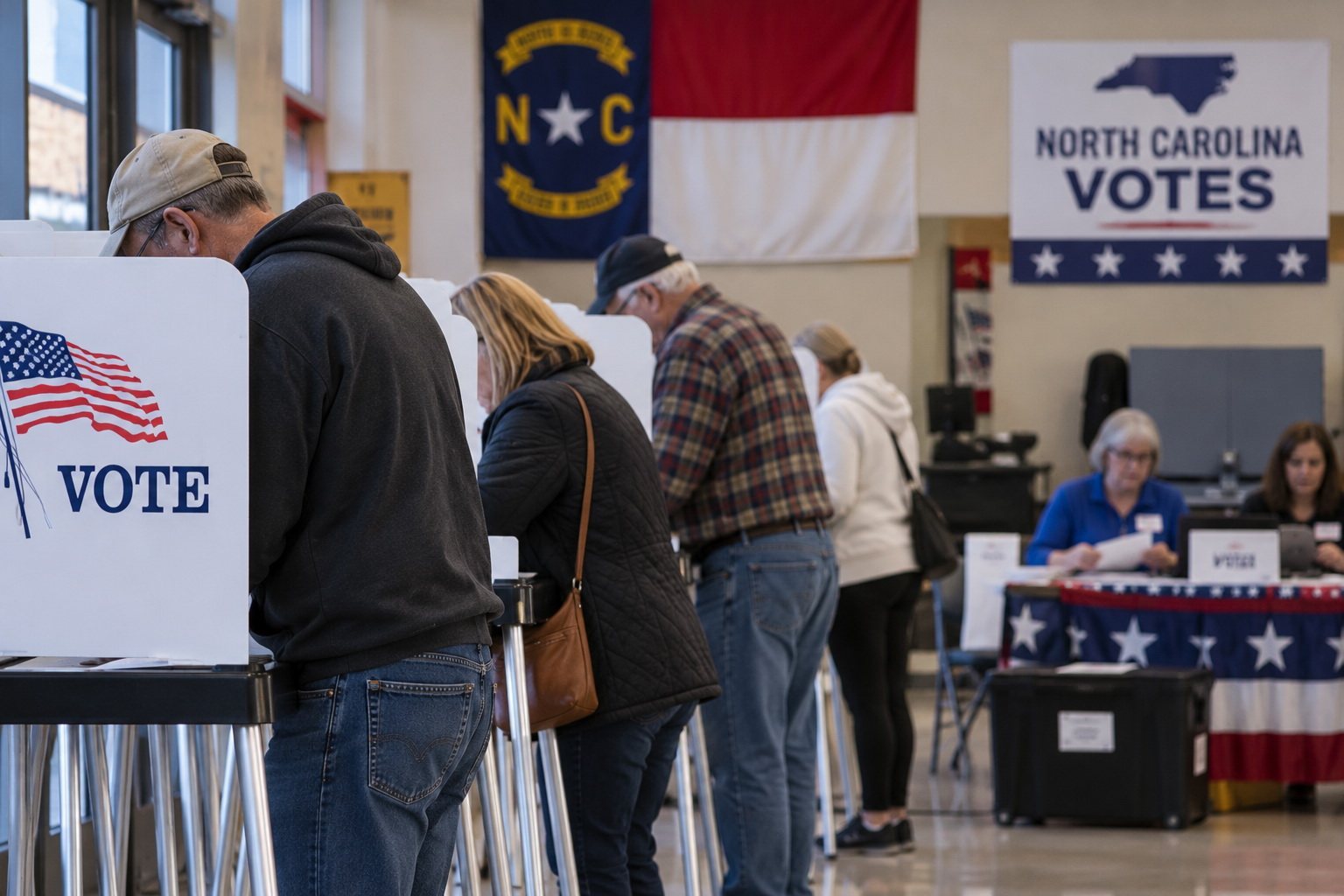
Armed individuals wearing tactical gear, masked activists photographing voters, and organized groups monitoring ballot drop boxes are raising serious concerns about voter intimidation in Arizona, less than two weeks before the November midterm elections.
The incidents, concentrated around ballot drop boxes in Maricopa County, have prompted law enforcement responses, federal referrals, and lawsuits as election officials attempt to protect voters from harassment.
The controversy is unfolding against the backdrop of former President Donald Trump's continued claims that the 2020 presidential election was stolen, allegations that have repeatedly failed to withstand scrutiny in courts and official investigations.
Now, activists claiming to be protecting election integrity are taking matters into their own hands.
Armed Men Appear at Ballot Drop Boxes
On Friday, October 21, sheriff's deputies responded to reports of two individuals wearing tactical gear and carrying firearms near a ballot drop box in Mesa, a suburb of Phoenix.
The men reportedly wore masks and ballistic vests while monitoring people delivering their completed ballots.
Other voters have complained about individuals recording their movements, photographing their license plates, and following them after they leave voting locations.
In one reported incident, a voter said people watching a ballot drop box photographed him and his wife, accused them of being involved in illegal ballot collection, and followed their vehicle out of the parking lot.
Arizona Secretary of State Katie Hobbs has referred multiple complaints of potential voter intimidation to law enforcement authorities, including the U.S. Department of Justice.
Republican Attorney General Condemns Intimidation
On Wednesday, Arizona Attorney General Mark Brnovich, a Republican, issued a public warning against harassment at ballot drop boxes.
Brnovich urged voters encountering threatening individuals or circumstances to immediately contact local law enforcement.
"Any form of voter intimidation is absolutely unacceptable and will not be tolerated," he declared.
His statement represents a notable intervention from a Republican statewide official in a controversy fueled partly by election conspiracy theories circulating among supporters of Trump.
Maricopa County Sheriff Paul Penzone has also increased security around ballot drop boxes, saying the incidents are forcing his department to divert resources toward protecting voters.
Election Conspiracy Theories Fuel Surveillance Efforts
Some of the individuals monitoring ballot drop boxes have associated themselves with Clean Elections USA, an organization encouraging volunteers to watch voting locations for suspected fraud.
The group's activities reflect broader efforts inspired by the film 2000 Mules, which alleges widespread illegal ballot collection during the 2020 election.
The film's central claims have not been substantiated by credible evidence establishing widespread election fraud.
Nevertheless, the allegations have circulated extensively in conservative political circles, contributing to suspicion of voters delivering absentee ballots.
Election officials emphasize that depositing a ballot in an authorized drop box is a lawful and routine part of the voting process.
Arizona law also permits certain individuals, including family members, household members, and caregivers, to return ballots on behalf of eligible voters.
The mere act of delivering more than one ballot does not establish that a crime has occurred.
Federal Court Asked to Intervene
The Arizona Alliance for Retired Americans and Voto Latino have filed a federal lawsuit seeking restrictions on the activities of Clean Elections USA.
The organizations argue that photographing, following, and intimidating voters could discourage lawful participation in the election.
During a Wednesday hearing, U.S. District Judge Michael Liburdi considered a request to restrict the group's monitoring activities near ballot drop boxes.
Attorneys representing Clean Elections USA argued that the proposed restrictions would violate constitutional protections for free speech and political observation.
Liburdi indicated that he hopes to issue a decision by Friday.
The legal dispute raises an important question: where does lawful election observation end and illegal voter intimidation begin?
Trump's Election Claims Remain Central
The confrontation comes nearly two years after Trump lost Arizona to President Joe Biden in the 2020 election.
Trump continues to insist that the election was stolen, despite recounts, audits, litigation, and investigations that have failed to establish widespread fraud capable of changing the result.
Those claims have helped sustain a movement of activists who believe ordinary election procedures require independent surveillance.
But critics warn that bringing firearms, tactical equipment, and cameras to voting locations creates an atmosphere that may discourage eligible citizens from casting ballots.
Federal law prohibits intimidation, threats, or coercion intended to interfere with a person's right to vote.
Voting Should Not Require Facing Armed Strangers
With Election Day approaching on November 8, Arizona officials face the challenge of maintaining public confidence while ensuring that voters can participate without harassment.
Lawful election observation is an established part of American democracy. But photographing voters' license plates, following their vehicles, and appearing near voting locations with firearms raise concerns that go far beyond ordinary observation.
The courts must now determine whether the reported conduct crosses the legal line into intimidation.
For voters simply attempting to return their ballots, the issue is more immediate: exercising the right to vote should not mean having to navigate masked strangers, surveillance cameras, or armed individuals outside an election drop box.