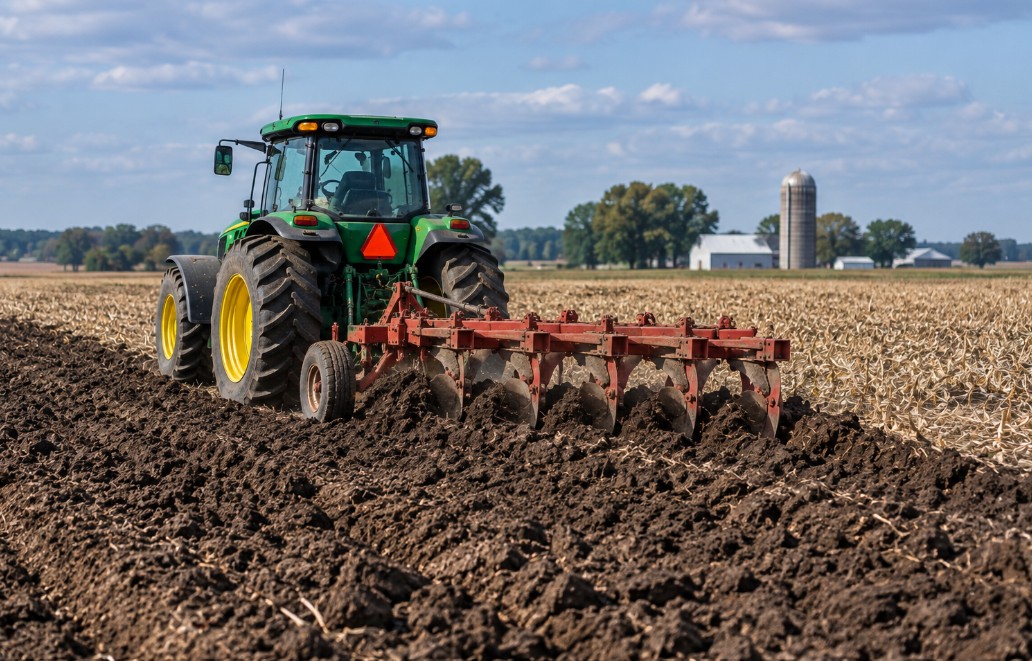
America's Farmers Are Getting Crushed by Record Diesel Prices
American farmers are heading into one of the most important periods of the agricultural calendar with another major expense eating into already-thin margins: diesel fuel.
Across the nation's farm belt, combines are moving through corn and soybean fields, tractors are running for hours at a time, and trucks are hauling crops from fields to farms, elevators and processors.
All of it requires fuel.
And right now, diesel is historically expensive.
The national average price of diesel has climbed above $6 per gallon, setting records as disruptions to global oil and refined-fuel supplies ripple through the American economy.
For farmers, there is no realistic option to simply stop driving.
The crop has to come out of the field.
"We Have to Harvest"
Near Forest City, Missouri, corn and soybean farmer Jason Kurtz told the Associated Press that he is paying roughly twice as much for diesel as he did last year.
His combine alone consumes about 200 gallons of diesel every day.
Kurtz expects to operate it for approximately 30 days during harvest.
That works out to roughly 6,000 gallons of diesel for the combine alone — before counting the fuel consumed by his tractors and trucks.
At $6 a gallon, that's approximately $36,000 worth of diesel just to operate that one machine through a 30-day harvest.
And unlike a commuter facing higher gasoline prices, a farmer cannot simply decide to leave the combine parked.
“We have to harvest,” Kurtz told the AP. “We have to run the machines. We have to use the diesel, so it cuts into our bottom line.”
That bottom line was already under pressure.
Farmers have also been dealing with increased costs for fertilizer, chemicals, seeds and agricultural equipment.
Diesel is now piling another major expense on top.
The Iran War Has Hit the Fuel Market
The diesel spike did not happen in isolation.
Energy markets have been severely disrupted during the U.S.-Israeli war with Iran, particularly by problems affecting shipping through the Strait of Hormuz and fuel production and distribution throughout the Middle East.
The Strait of Hormuz is one of the most important energy corridors in the world.
Disruptions there can quickly affect global crude oil and refined petroleum supplies.
At the same time, Ukrainian attacks on Russian refineries have reduced supplies from another important source of diesel exports.
The result has been a global squeeze on diesel.
Before the war with Iran began in late February, the national average price for diesel was approximately $3.76 per gallon.
By September, it had climbed above $6.
That means American farmers are paying dramatically more for one of the most basic necessities required to operate a modern farm.
It's Not Just the Tractor
When most Americans picture fuel consumption on a farm, they probably imagine a tractor.
That's only the beginning.
A modern agricultural operation can use diesel in combines, tractors, irrigation systems, generators, loaders and other heavy equipment.
Then the crop has to move.
Grain may be hauled from the field to the farm, from the farm to an elevator, and eventually to processors or other buyers.
Those trucks burn diesel too.
Rail transportation is being affected as well.
Reuters reported this month that fuel surcharges on U.S. rail shipments of grain have more than doubled compared with a year earlier.
Farmers therefore can get hit multiple times by the same fuel-price increase.
They pay more to operate their equipment.
They pay more to transport their crops.
And they can pay higher surcharges to move agricultural products through the transportation network.
California Farmers Are Facing an Even Bigger Bill
The situation is particularly severe in California.
California diesel prices have climbed above $8 per gallon, considerably higher than the national average.
That matters in a state with one of the largest agricultural economies in the country.
California's farms produce everything from almonds, walnuts and grapes to lettuce, tomatoes, strawberries, dairy products and countless other commodities.
Much of that production depends on diesel-powered machinery and trucks.
Ryan Jacobsen of the Fresno County Farm Bureau described the double impact facing farmers: higher costs to operate equipment on the farm and higher trucking and transportation surcharges being passed back to producers.
California farmers already operate in a state where fuel typically costs more than the national average because of taxes, environmental requirements and the relative isolation of the state's fuel market.
The current global energy disruption has made that existing price difference even more painful.
Eventually, Someone Has to Pay
Higher diesel prices don't necessarily remain on the farm.
They can work their way through the entire food system.
Consider something as ordinary as a head of lettuce.
Farm equipment is used to prepare the field.
Equipment is used during planting and harvesting.
Trucks move the crop from the field.
More trucks may move it to a processing or distribution facility.
Another truck eventually carries it to a grocery store.
Diesel can be consumed at nearly every stage.
When those transportation and production costs rise substantially, farmers, processors, distributors and retailers have to decide how much of the increase they can absorb.
Some of it can eventually reach consumers.
That is why economists are warning that sustained high diesel prices could contribute to higher food prices.
Farmers Have Little Room to Maneuver
The timing makes the situation particularly difficult.
A family deciding whether to take a weekend road trip can cancel the trip when gasoline becomes too expensive.
A farmer staring at thousands of acres of mature corn doesn't have that luxury.
Harvest windows are dictated by weather and biology, not fuel prices.
Waiting too long can mean losing part of the crop.
That leaves farmers purchasing diesel regardless of the price.
For operations already facing tight margins, the additional expense can mean postponing equipment purchases, delaying maintenance, reducing other spending or simply accepting a smaller profit — or a larger loss — for the year.
Some farms are in a better financial position to absorb the increase than others.
Smaller and heavily leveraged operations can be particularly vulnerable.
The Cost Doesn't Stop at the Farm Gate
The diesel crisis illustrates something that gets lost when Americans talk about "gas prices."
Gasoline is the price consumers see illuminated on giant signs beside highways.
Diesel is less visible to millions of Americans.
But diesel powers much of the machinery that produces and transports the things they buy.
It moves food.
It moves freight.
It powers construction equipment.
It powers farm machinery.
And when diesel becomes significantly more expensive, those costs can spread far beyond the people standing at the diesel pump.
For America's farmers, however, the impact isn't theoretical.
Harvest is happening now.
The combines are running now.
The trucks are moving now.
And every day those machines operate, thousands of farmers are buying some of the most expensive diesel the country has ever seen.