For months, President Donald Trump had publicly minimized the threat posed by COVID-19, repeatedly predicted that the virus would disappear and resisted making mask-wearing a central part of his public-health message.
Then the virus reached the president himself.
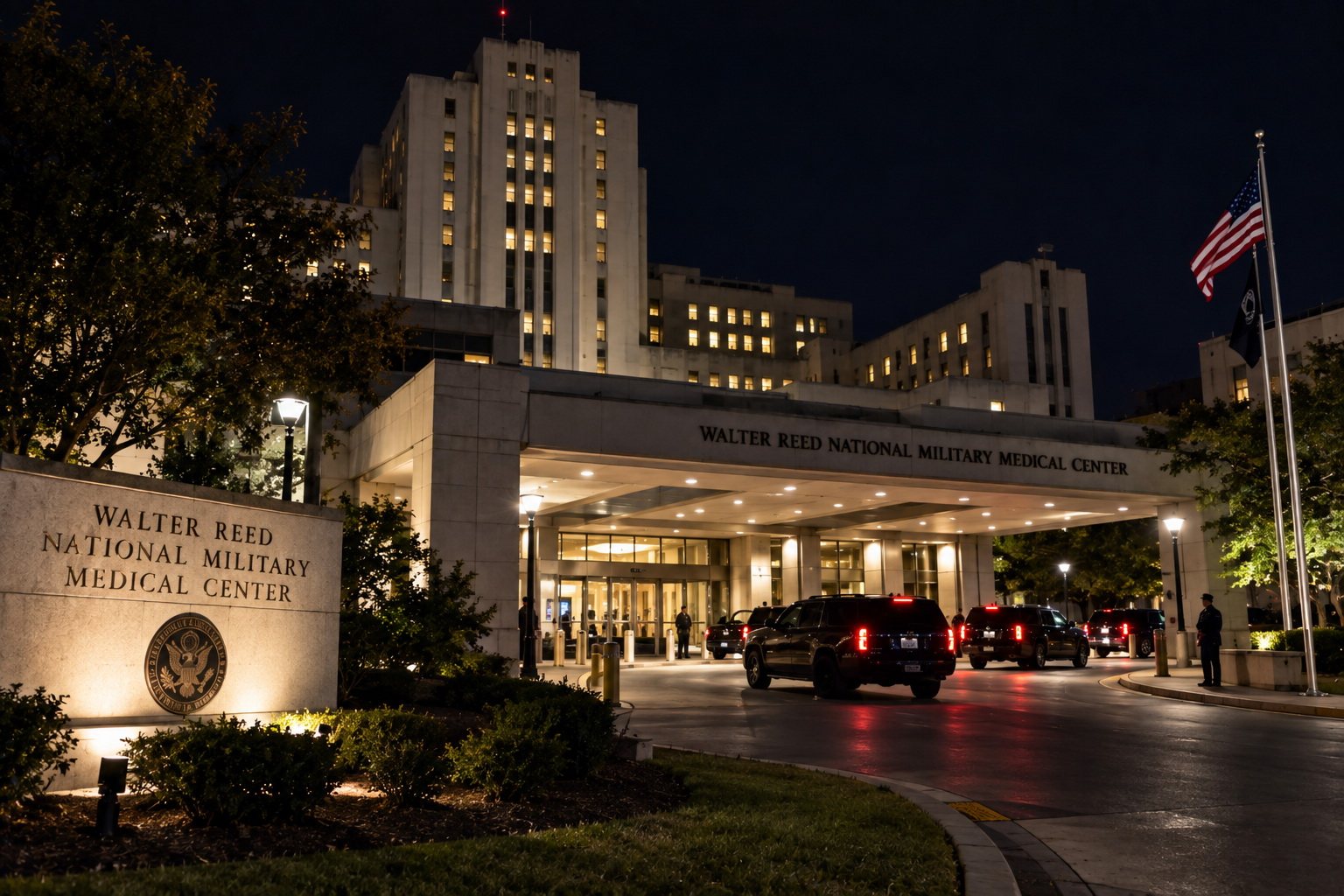
On October 7, 2020 — just two days after returning to the White House following hospitalization at Walter Reed National Military Medical Center — Trump released a video describing his own COVID-19 infection as a “blessing from God.”
“I think this was the blessing from God that I caught it,” Trump said. “This was a blessing in disguise.”
He credited an experimental antibody treatment made by Regeneron with making him feel better and went considerably further than the available medical evidence, calling the treatment a “cure.”
The moment created a remarkable contrast.
After months of telling Americans not to be overly frightened by COVID-19, Trump had become one of its patients.
And unlike most Americans infected with the virus, the president had immediate access to a team of physicians, hospitalization at Walter Reed and experimental treatments that were not yet generally available to the public.
Trump Had Repeatedly Downplayed the Virus
Trump's COVID infection came after months in which his public statements frequently minimized the danger posed by the coronavirus.
He repeatedly predicted that the virus would disappear.
He pushed for businesses and schools to reopen.
He frequently emphasized the number of people who recovered rather than the number becoming seriously ill or dying.
Most significantly, recordings released by journalist Bob Woodward in September revealed that Trump privately understood early in the pandemic that the coronavirus was dangerous.
In a February 7 conversation with Woodward, Trump described the virus as significantly more deadly than the seasonal flu and acknowledged that it could spread through the air.
Yet Trump later told Woodward that he deliberately wanted to “play it down.”
“I still like playing it down,” Trump said in March, “because I don't want to create a panic.”
Trump defended that approach as an effort to maintain calm.
Critics argued that the president's public messaging deprived Americans of a clear understanding of the danger they faced.
The President and Masks
Masks became one of the most visible examples of the disconnect between federal public-health recommendations and Trump's personal behavior.
On April 3, the Centers for Disease Control and Prevention recommended that Americans wear cloth face coverings in public settings where maintaining social distance was difficult.
Trump announced the recommendation at the White House.
Then he immediately stressed that it was voluntary.
He also said he did not intend to wear one himself.
Over the following months, Trump was frequently seen at public events without a mask, even as public-health officials encouraged Americans to use them to reduce transmission.
He occasionally wore a mask and at times acknowledged that masks could be useful. In July, for example, he publicly said he supported wearing masks in appropriate circumstances.
But he never made consistent mask use a defining part of his pandemic message.
At the first presidential debate on September 29, Trump even mocked Democratic nominee Joe Biden's frequent mask wearing.
“I don't wear masks like him,” Trump said.
Three days later, Trump announced that he had tested positive for COVID-19.
The President Becomes a Patient
Trump's illness quickly became serious enough for doctors to send him to Walter Reed on October 2.
During his illness, Trump experienced drops in his blood-oxygen level.
Doctors treated him with several medications, including the antiviral remdesivir, the steroid dexamethasone and an experimental monoclonal-antibody cocktail produced by Regeneron.
Trump returned to the White House on October 5.
Upon arriving, he climbed the steps to the Truman Balcony and removed his mask while television cameras recorded the moment.
Earlier that day, Trump had told Americans:
“Don't be afraid of Covid.”
It was an extraordinary message from a president who had just spent several days hospitalized with the disease.
A White House Outbreak
Trump's infection also wasn't occurring in isolation.
COVID-19 was spreading through his political and governmental circle.
First lady Melania Trump tested positive.
Senior adviser Hope Hicks tested positive.
White House press secretary Kayleigh McEnany tested positive.
Former New Jersey Governor Chris Christie, who had helped Trump prepare for the presidential debate, also contracted COVID-19 and was hospitalized.
Other White House employees, political advisers, senators and people connected to administration events tested positive during the outbreak.
Attention focused particularly on a September 26 Rose Garden ceremony announcing Amy Coney Barrett's nomination to the Supreme Court.
Many attendees had been seated closely together, and numerous people were photographed without masks.
Several attendees later tested positive.
It was never conclusively established that the Rose Garden event itself was the source of Trump's infection or the broader outbreak, but it became a powerful image of the administration's approach to pandemic precautions.
“A Blessing in Disguise”
Then came Trump's October 7 video.
Standing outside the Oval Office, Trump described the experimental Regeneron treatment he had received.
He said he had felt better rapidly after receiving it.
Trump then made a claim that went beyond what scientists had established.
He called it a “cure.”
At that point, Regeneron's antibody cocktail had not yet received emergency-use authorization from the Food and Drug Administration.
It remained an investigational treatment.
Trump nevertheless promised Americans that he would make the treatment available and free.
“I want everybody to be given the same treatment as your president,” he said.
Then he explained why he believed contracting COVID-19 had actually been beneficial.
“I think this was the blessing from God that I caught it,” Trump said.
“This was a blessing in disguise.”
The President Received Treatment Most Americans Could Not
Trump's personal experience with COVID-19 was dramatically different from that of the typical American patient.
He was president of the United States.
He had a dedicated medical team.
He was flown aboard Marine One to one of the nation's premier military medical facilities.
He received continuous medical monitoring.
And he received an experimental antibody treatment that was not yet authorized for widespread use.
Trump himself acknowledged the disparity when he said he wanted ordinary Americans to receive “the same treatment as your president.”
But that treatment was not yet something doctors could simply provide to every COVID patient.
His rapid recovery therefore could not necessarily be treated as representative of what an average American could expect after contracting the virus.
More Than 200,000 Americans Were Already Dead
Trump's description of his infection as a blessing also came against a grim national backdrop.
By early October 2020, more than 200,000 Americans had died from COVID-19.
Millions had been infected.
Families had been separated from dying relatives.
Hospitals had struggled with waves of critically ill patients.
Businesses had closed.
Schools had been disrupted.
Millions of Americans had lost jobs or income.
For many of those families, COVID-19 had been anything but a blessing.
A Remarkable Turn in the Pandemic
Trump's October 7 remarks captured one of the strangest moments of his administration's response to COVID-19.
The president who had spent months telling Americans the virus would disappear had contracted it.
The president who resisted consistently modeling mask use had been hospitalized with a respiratory disease masks were intended to help slow.
The president who had repeatedly emphasized reopening and returning to normal had been evacuated to Walter Reed for treatment.
And after emerging from the hospital, he described the experience as a blessing.
Trump's infection did not suddenly transform his approach to the pandemic.
Instead, he used his recovery to reinforce much of the message he had delivered before becoming sick: Americans should not allow COVID-19 to dominate their lives, treatments were improving, and the country needed to move forward.
But October 7, 2020 provided a stark demonstration of something the coronavirus had already shown millions of Americans.
The virus did not care about political messaging.
It could reach anyone.
Even the president of the United States.