Elon Musk is back in the federal government.
This time, he isn't being asked to slash agencies, fire federal workers or hunt for government waste.
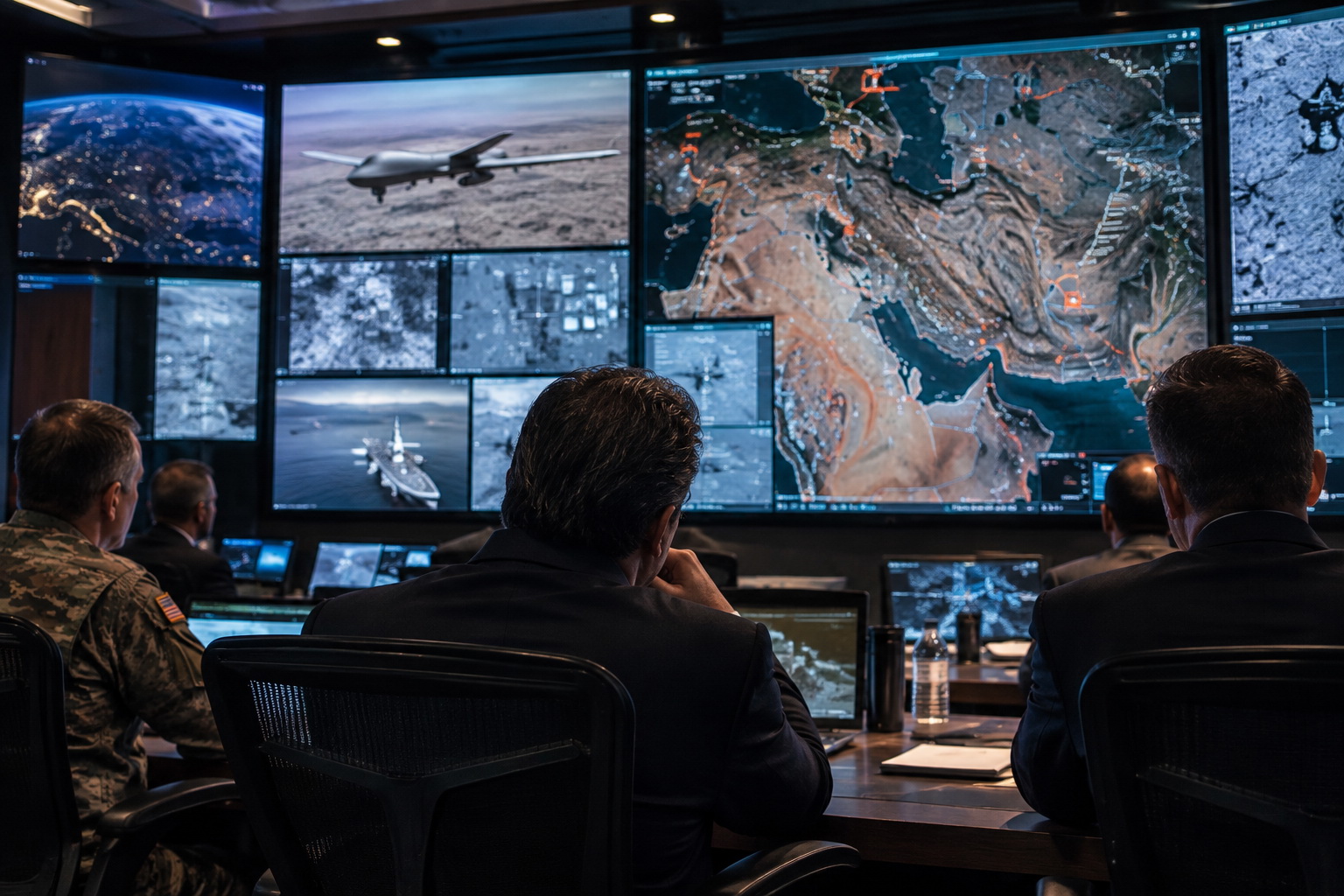
He's being asked to help determine how the United States fights its future wars.
Defense Secretary Pete Hegseth announced Wednesday that Musk will join former House Speaker Newt Gingrich and defense technology entrepreneur Palmer Luckey in leading a new Pentagon initiative called Project Meridian.
The 120-day study will examine what future battlefields might look like and what weapons, technologies and capabilities American troops will need to dominate them.
Hegseth called the three men some of the nation's “best minds.”
For Musk, the appointment represents a remarkable return to government service barely a year after his controversial tenure with the Department of Government Efficiency.
And DOGE's record gives Congress and the public plenty of reason to scrutinize his newest assignment.
DOGE Promised Enormous Savings
Musk entered the Trump administration promising to dramatically reduce federal spending.
At various points, he suggested DOGE could identify as much as $2 trillion in annual savings.
That number eventually shrank substantially.
DOGE ultimately published its claimed savings on what it called its “Wall of Receipts.”
By July 2026, DOGE claimed that its contract, grant and lease cancellations alone had saved taxpayers approximately $110 billion.
Then government auditors checked the receipts.
The Government Accountability Office released an extensive review in August examining DOGE's claims.
Its findings raised serious questions about whether many of those savings could actually be substantiated.
GAO found that some DOGE savings estimates were incorrect or lacked supporting evidence.
For grants, investigators said DOGE provided insufficient information to verify the methodology used to calculate 96 percent of its reported savings.
DOGE also listed 13,476 contracts as terminated.
But when GAO compared those claims with the government's Federal Procurement Data System, only 43.2 percent of the claimed contract savings were associated with contracts that federal records showed as completely or partially terminated.
The remaining contracts either weren't terminated or couldn't be matched because DOGE hadn't provided enough information.
Even some of the real-estate savings weren't entirely DOGE's doing.
GAO found that 108 of the 264 leases DOGE claimed credit for terminating were already in the process of being eliminated before DOGE existed.
The audit didn't conclude that DOGE accomplished nothing.
It concluded something arguably more important when evaluating Musk's record:
The government's own auditors couldn't reliably verify substantial portions of what DOGE claimed it had accomplished.
Now Musk Is Being Asked to Help Shape America's Military
Despite that record, Hegseth is bringing Musk back for an assignment with potentially far greater consequences.
Project Meridian will examine emerging forms of warfare and determine which technologies America should begin developing, testing and deploying.
The Pentagon says the study will look at artificial intelligence, autonomous weapons, robotics and other technologies that could fundamentally change warfare.
The project is expected to produce recommendations within 120 days.
Unlike DOGE, however, Musk won't be doing this alone.
Palmer Luckey, founder of defense technology company Anduril Industries, will serve alongside him.
So will former Republican House Speaker Newt Gingrich.
Pentagon Chief Technology Officer Emil Michael will oversee the effort.
Hegseth says bringing outside innovators into the process will help the Pentagon escape traditional bureaucratic thinking.
There is a legitimate argument behind that approach.
Modern warfare is changing extraordinarily quickly.
Ukraine has demonstrated how inexpensive drones can transform battlefields.
Artificial intelligence is increasingly being incorporated into intelligence gathering, targeting and autonomous systems.
China is rapidly expanding its military technology.
And America's traditional weapons procurement system can take years — sometimes decades — to move a new technology from concept to deployment.
Silicon Valley undoubtedly has expertise the Pentagon needs.
But there is another issue surrounding Project Meridian that deserves scrutiny.
The People Advising the Pentagon Also Do Business With the Pentagon
Musk isn't simply a technology entrepreneur offering independent advice.
His company SpaceX is already a major federal contractor whose satellites and launch systems are deeply connected to America's national-security infrastructure.
Luckey's Anduril is also a major defense contractor.
The company builds autonomous military systems, drones, missiles and other technology for the Pentagon.
Now the founders of companies selling advanced technology to the Defense Department will participate in a project helping determine what advanced technologies the Defense Department should pursue.
That doesn't automatically mean anything improper will occur.
It does mean transparency and conflict-of-interest safeguards matter enormously.
Even Hegseth acknowledged the danger of allowing the Pentagon to simply ask itself what it needs and then answer its own questions.
The solution he chose was bringing private-sector technology leaders into the room.
But when those technology leaders operate companies capable of selling the Pentagon the very systems being discussed, a different set of questions arises.
DOGE Should Be the Warning
Musk's DOGE experience matters here not because government efficiency was a bad goal.
Few Americans would object to eliminating waste, fraud or unnecessary bureaucracy.
The problem was the enormous gap between DOGE's promises and what government auditors were ultimately able to verify.
DOGE moved extraordinarily quickly.
Agencies were disrupted.
Federal workers were removed.
Contracts were canceled.
Programs were targeted.
And enormous savings figures were publicly announced.
Only afterward did auditors begin determining whether the numbers behind those claims actually held up.
In many cases, GAO found that they didn't — or couldn't be substantiated with the information DOGE provided.
That experience offers an obvious lesson for Project Meridian.
Move fast and break things may be an acceptable philosophy when developing an app.
It becomes considerably more consequential when the things being developed are autonomous weapons, artificial intelligence systems and the technologies American servicemembers will depend upon in combat.
The Stakes Are Considerably Higher This Time
Project Meridian isn't merely another government efficiency commission.
Its recommendations could influence billions of dollars in future defense spending and shape how American troops fight wars decades from now.
The Pentagon says the project will study everything from conventional battlefields to emerging technological domains and produce actionable recommendations for developing and fielding new systems.
Those are consequential decisions.
And Musk arrives at the table with a government record that deserves examination.
DOGE promised historic savings.
The Government Accountability Office subsequently found that some of those savings were incorrectly calculated or unsupported, that most reported grant savings lacked enough information to verify the methodology, and that DOGE claimed credit for some actions already underway before it existed.
Now Pete Hegseth is handing Musk another enormously ambitious government assignment.
Except this time, the objective isn't figuring out how Washington spends its money.
It's helping figure out how America fights its wars.