Just eleven days after the longest government shutdown in American history came to an end, President Donald Trump stood before Congress and renewed the demand that had helped cause it in the first place: funding for a wall along the U.S.-Mexico border.
Even the State of the Union itself had become part of the shutdown confrontation.
Trump had originally been expected to deliver the address on January 29. But with hundreds of thousands of federal employees furloughed or working without pay, House Speaker Nancy Pelosi postponed the invitation to address Congress until the government reopened.
Trump eventually agreed to temporarily reopen the government on January 25 without receiving the $5.7 billion in border-wall funding he had demanded.
Eleven days later, he finally stood behind the podium in the House chamber.
Trump opened with an appeal for cooperation.
“We must choose between gridlock and greatness,” he told lawmakers, presenting an agenda that he said belonged not to Republicans or Democrats but to the American people.
But much of the address returned directly to the bitter political dispute Washington had just spent more than a month fighting.
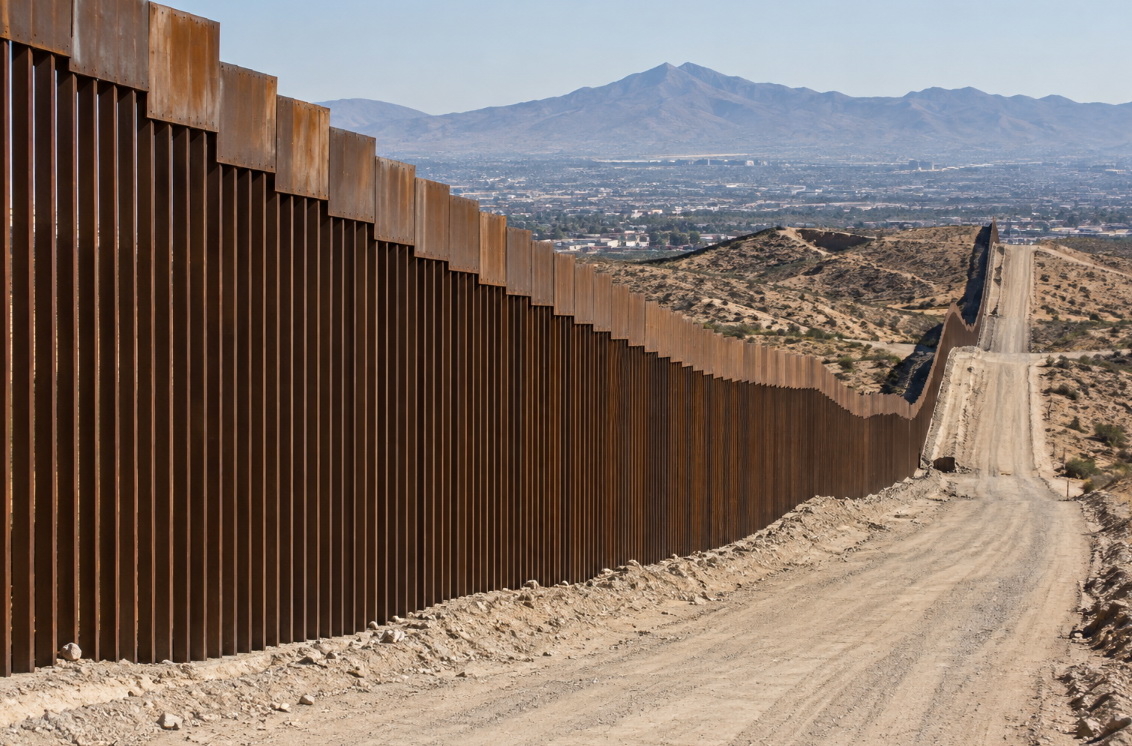
Trump described conditions along the southern border as a threat to American safety and prosperity and again demanded construction of a physical barrier.
“I will get it built,” Trump declared.
The president portrayed illegal immigration as a danger to American workers and communities. He discussed violent crime, gangs, human trafficking and illegal drugs while arguing that a border wall was necessary to protect the country.
Some of the evidence he offered, however, was misleading.
Trump pointed to El Paso, Texas, claiming that the city had once suffered extraordinarily high levels of violent crime before a border barrier helped transform it into one of America's safest cities.
The chronology didn't support that story.
El Paso already had relatively low violent-crime rates before construction of its border fencing began. The city's crime rate did not suddenly collapse after the barrier appeared.
Trump also connected the border wall to the flow of illegal drugs into the United States.
Yet government assessments showed that much of the heroin and other illegal narcotics entering from Mexico were smuggled through official ports of entry, frequently concealed inside passenger vehicles and commercial trucks. A wall between those ports would do little to stop drugs entering through the ports themselves.
The speech therefore presented Americans with an unusual political contrast.
Trump repeatedly called for compromise, cooperation and national unity while simultaneously returning to the demand that had just contributed to a historic shutdown.
And the confrontation was not over.
Congress still had not given Trump the amount of money he wanted for his wall.
Within ten days, the president would dramatically escalate the dispute.
On February 15, Trump would declare a national emergency at the southern border, allowing his administration to attempt to redirect billions of dollars Congress had not authorized for his wall project.
The February 5 State of the Union was therefore more than another presidential address.
It was the bridge between two chapters of the same confrontation.
The government shutdown had failed to deliver Trump's wall funding.
Now he was preparing to find another way to get it.