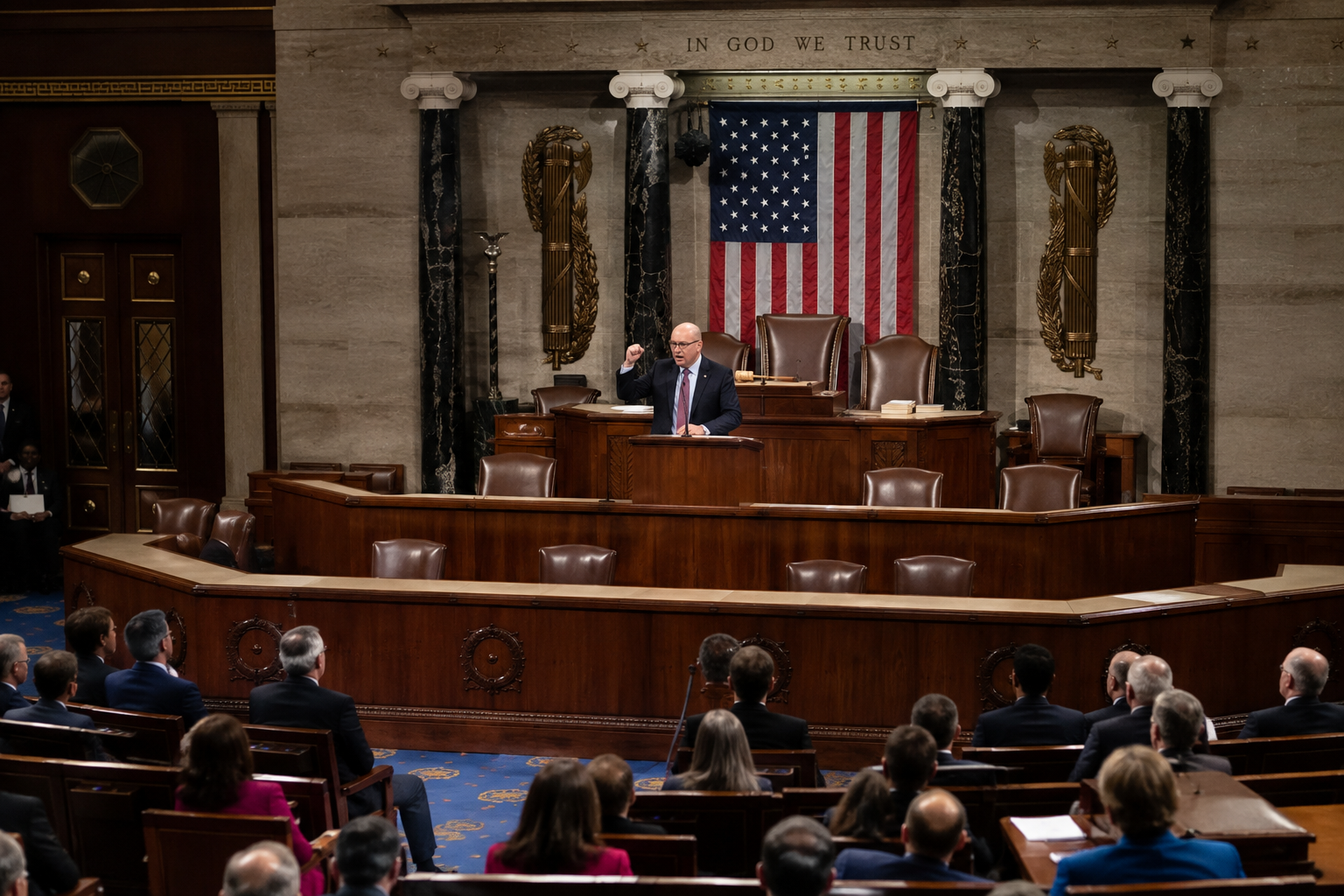
President Donald Trump is facing a sweeping new impeachment challenge after Democratic Rep. Steve Cohen of Tennessee introduced 26 separate articles of impeachment accusing the president of abuses of power, violations of his oath of office, defiance of Congress and the courts, attacks on constitutional rights, and using the presidency for personal benefit.
The resolution, introduced September 24, does not mean Trump has been impeached. For that to happen, the House of Representatives would have to approve one or more articles by a majority vote.
But Cohen's resolution represents something else: an attempt to assemble many of the controversies of Trump's second presidency into a single constitutional indictment.
And the list is extraordinary in its scope.
Twenty-Six Accusations
Cohen's articles do not revolve around one scandal or one event.
They encompass Trump's conduct involving elections, the war with Iran, military deployments inside the United States, immigration enforcement, tariffs, federal spending, prosecutions of political opponents, presidential pardons, the press, universities, law firms and Trump's financial interests.
The first article accuses Trump of undermining democracy by sowing doubt about American elections.
The second goes directly to one of the most consequential actions of his second term: the war with Iran. Cohen accuses Trump of abusing presidential power by waging war without congressional authorization.
Another article challenges military actions in international waters near Venezuela, while a separate article targets Trump's deployment of military forces in American cities.
Several focus on immigration.
Cohen challenges Trump's attempt to restrict birthright citizenship, the administration's use of the Alien Enemies Act, its treatment of deportees sent to El Salvador's CECOT prison and what Cohen describes as defiance of federal court orders involving immigration enforcement.
Congress Versus Presidential Power
A recurring theme throughout the resolution is a fundamental question that has followed Trump throughout his second term:
How much power can a president exercise without Congress?
Cohen accuses Trump of withholding money that Congress already appropriated, dismantling congressionally created programs and attempting to abolish the Department of Education despite the department having been established by Congress.
Another article targets the firing of inspectors general without the notice to Congress required by law.
Cohen also attacks Trump's use of emergency powers to impose tariffs, characterizing them as the president unilaterally imposing taxes on Americans without proper congressional authority.
Taken together, these articles present Cohen's argument that Trump has repeatedly attempted to move powers traditionally belonging to Congress into the executive branch.
Political Enemies and Presidential Power
Other articles focus on Trump's use of government authority against perceived opponents.
One specifically cites prosecutions involving former FBI Director James Comey, New York Attorney General Letitia James and Sen. Adam Schiff, accusing Trump of abusing presidential power to pursue political enemies.
Another accuses the president of corruptly using his pardon authority.
Cohen also challenges executive orders directed against law firms and accuses the administration of coercing universities by threatening or withholding federal funding.
The argument running through these articles is that presidential powers that are legitimate in themselves become constitutionally problematic when they are allegedly used for retaliation, intimidation or personal political purposes.
The Press
Two articles deal specifically with Trump's relationship with the media.
One accuses the administration of attacking freedom of the press by excluding reporters from the White House because of coverage Trump disliked.
Another accuses Trump of improperly pressuring CBS and ABC over editorial content.
Trump has frequently argued that major news organizations are biased against him and has defended his confrontations with media companies as responses to inaccurate or unfair reporting.
Cohen's resolution presents those confrontations differently: as attempts by the government to use presidential power to influence what independent news organizations publish or broadcast.
The Money
The final portion of Cohen's case turns increasingly toward money and personal benefit.
One article alleges abuse involving an IRS settlement and the federal Judgment Fund.
Another accuses Trump of violating constitutional restrictions on presidential emoluments by personally profiting from the presidency.
That final charge revives an issue that followed Trump throughout his first administration and has returned during his second: whether the intersection of Trump's businesses, family financial interests and presidency creates unconstitutional financial conflicts.
Even the White House East Wing Makes the List
The resolution also includes some highly unusual allegations.
Article XXIII accuses Trump of abusing presidential power by demolishing the White House East Wing without congressional approval.
Article XXV accuses him of "self-aggrandizement" through the renaming of public institutions, seizure of cultural and civic property and what the resolution describes as the personal appropriation of national currency.
These allegations illustrate just how expansive Cohen intended the resolution to be.
Rather than identify a single impeachable episode, Cohen is attempting to document what he sees as a pattern of presidential conduct.
Cohen Has Been Here Before
This is not Cohen's first attempt to impeach Donald Trump.
In November 2017, during Trump's first term, Cohen introduced five articles of impeachment.
Nine years later, he has returned with 26.
Cohen argues that the dramatically larger number reflects the accumulation of conduct he believes violates Trump's constitutional obligations.
Trump has already been impeached twice by the House of Representatives — in 2019 and again in 2021 — making him the only president in American history to have been impeached twice. The Senate acquitted him both times.
The latest resolution does not constitute a third impeachment. Unless the House votes to adopt at least one of Cohen's articles, they remain allegations contained in a congressional resolution.
An Uphill Battle in the Current House
There is also little indication that Cohen's resolution currently has enough support to produce another impeachment.
Republicans control the House, and Democratic leaders have themselves shown reluctance to pursue another impeachment effort without a broader investigation and political consensus.
That was demonstrated only days before Cohen introduced his resolution.
On September 15, the House voted to table a separate Trump impeachment resolution introduced by Democratic Rep. Al Green of Texas. Republicans were joined by dozens of Democrats in preventing that effort from advancing.
Cohen's 26-article resolution therefore may be more significant as a record of accusations against the administration than as an immediate path toward Trump's removal from office.
A Congressional Record of Trump's Second Term
That may ultimately be the most important aspect of Cohen's action.
Twenty-six articles of impeachment amount to something considerably larger than another political headline.
They assemble many of the defining controversies of Trump's second administration into one document: Iran, immigration, military deployments, tariffs, federal spending, attacks on institutions, confrontations with the courts, pressure on the media and allegations of personal financial benefit.
Whether Congress ultimately agrees with Cohen is a separate question.
But his resolution ensures that those allegations now exist together as part of the congressional record.
Trump's second presidency has produced no shortage of individual controversies.
Steve Cohen has now attempted to connect 26 of them into a single argument: that they represent not isolated disputes over policy, but a broader pattern of presidential power exceeding constitutional limits.